

Formula 1’s 2026 rules package is now locked in: a reworked hybrid power unit that targets an even split between internal combustion and electric output, mandatory use of fully sustainable fuel, and a chassis philosophy designed to make cars smaller, lighter and less draggy - with driver-operated active aerodynamics replacing today’s familiar overtaking toolkit.
The changes are being sold by the rulemakers on three fronts: sustainability (100% “advanced sustainable” fuel and greater electrification), competitiveness (simpler, more road-relevant hybrid architecture intended to attract and retain manufacturers), and racing quality (cars that are easier to follow and more nimble, with less reliance on extreme ground-effect set-ups).
Power units: more electric power, simpler hardware
The headline shift is the increased role of the electric side of the hybrid system. Under the 2026 concept, electrical deployment rises from roughly 20% of total output in the current generation to around 50% in the new one, according to F1’s own technical explainer.
Crucially, the complex exhaust-heat recovery system (MGU-H) is removed, while the kinetic motor generator (MGU-K) becomes substantially more powerful. The MGU-K’s maximum output is set at 350kW - nearly three times the previous 120kW figure referenced in F1’s explainer - making the electrical system a core performance pillar rather than a supplement.
The FIA’s published 2026 power-unit technical regulations also detail energy-flow constraints designed to shape how that performance is delivered, including a fuel energy flow limit of 3000 MJ/h and explicit caps on electrical power and per-lap energy movement through the ERS-K system.
For manufacturers, the intent is twofold: cut complexity and cost relative to the current unit’s most intricate component, while pushing electrification into a range that mirrors where the wider automotive industry is actually investing. F1 argues that deleting the MGU-H makes the system “less complicated and thus more attractive to manufacturers,” while keeping the 1.6-litre turbo V6 architecture as the combustion base.
Fuel: 100% “advanced sustainable” blends, no crude-oil feedstock
The other defining plank is fuel. From 2026, F1 mandates “Advanced Sustainable Fuels” - described in F1’s explainer as e-fuels derived from sources such as carbon capture, municipal waste and non-food biomass, independently certified to meet sustainability standards, with no components sourced from crude oil.
This is more than a branding change. In performance terms, F1 is explicit that the “success” of the transition will be measured by fans barely noticing - meaning the series expects the fuel change to be effectively transparent in spectacle while significant in climate messaging and technology demonstration.
It also ties into F1’s broader sustainability target, which the series frames as a push toward net zero by 2030 (covering logistics, venues and operations as well as the cars).
Chassis: smaller, lighter, narrower - and less drag
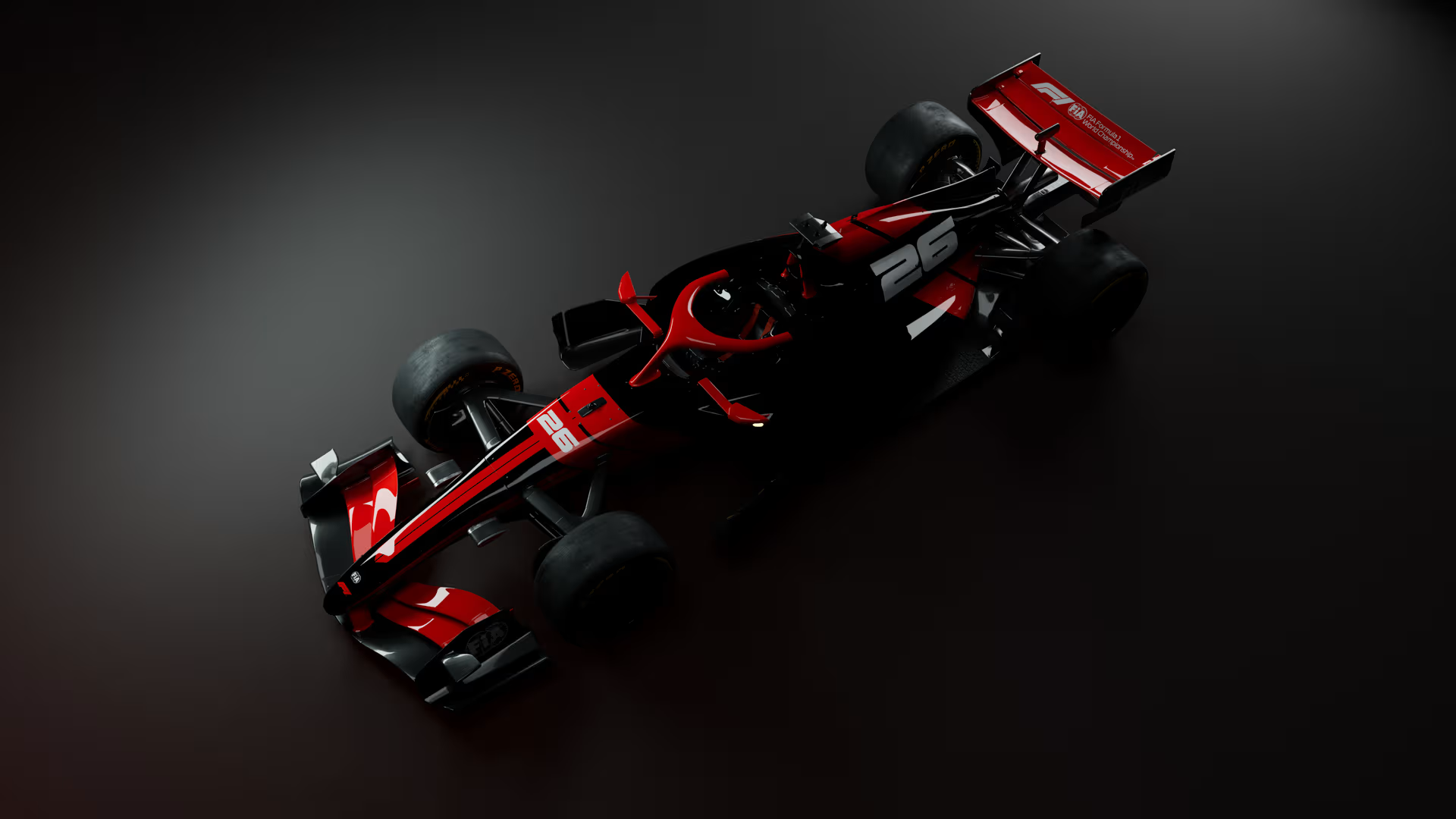
On the car side, the 2026 aerodynamic rules aim to reverse the long-term creep in size and mass.
According to F1’s regulations explainer:
Maximum wheelbase is reduced by 200mm to 3400mm
Overall width is cut by 100mm to 1900mm
Minimum weight is reduced by 30kg to 768kg, which the FIA breaks down as 722kg car plus an estimated 46kg tyres
The same FIA/F1 summary says the package also targets a 30% reduction in downforce and a 55% reduction in drag, a combination aimed at improving efficiency and making cars more “raceable.”
Tyres remain 18-inch, but widths shrink: front tyres by 25mm and rears by 30mm, with tyre supplier Pirelli suggesting a “minimal loss” of grip and estimating around 5kg saved per set.
Active aerodynamics: a new driver toolset
The most visible new feature is active aero: movable front and rear wing elements designed to switch between configurations for corners versus straights.
F1’s explainer describes two modes:
“Z-mode” as the default configuration, with wing elements opening/angling to support cornering performance
“X-mode” as a low-drag configuration to maximise straight-line speed, driver-activated and expected (in current discussions) to be available on straights longer than roughly three seconds
The concept is to make the aero trade-off more explicit and controllable, while also reducing turbulence sensitivity through bodywork revisions - including removing front wheel arches and mandating elements intended to better manage wheel wake.
Safety: strengthened structures and clearer electrical status
Alongside performance and sustainability, the 2026 rules introduce further safety requirements. F1’s explainer highlights:
A revised two-stage front impact structure intended to reduce the risk of the structure breaking away from the survival cell in multi-impact incidents
Increased side intrusion protection, including around the cockpit and fuel cell
Higher roll hoop load requirements, rising from 16G to 20G, plus increased test loads
New lateral safety lights to indicate ERS status when a car is stopped on track
What it means: a reset for teams, suppliers - and the competitive order
Any major regulation cycle reshuffles competitive hierarchies, but 2026 combines two resets at once: power units and chassis/aero. That’s why the series has openly framed it as one of the biggest technical overhauls in modern F1, and why teams are already treating it as a long-lead project with design philosophies that may diverge sharply.
The power-unit shift is especially consequential. With electric deployment dramatically increased and the MGU-H removed, teams face a new optimisation problem around energy harvesting, battery management and straight-line performance - all while operating within tightly defined energy-flow limits in the FIA’s regulations.
For the automotive industry, F1 is positioning 2026 as a proof-of-concept platform: advanced sustainable fuel compatibility plus high-output hybrid performance that, at least in part, maps onto road-relevant technology pathways. Manufacturers such as Honda have already published their own overviews of the regulatory direction and component changes, underlining how closely the new rules are being tracked beyond the paddock.
Meanwhile, the racing promise is straightforward: smaller cars, less drag, new active-aero behaviour, and less reliance on extreme ground effect - all aimed at improving the ability to follow and fight. Whether that delivers closer racing in practice will depend on how quickly teams converge on similar solutions and how the FIA polices development paths, but the intent is unambiguous in the published framework.


