

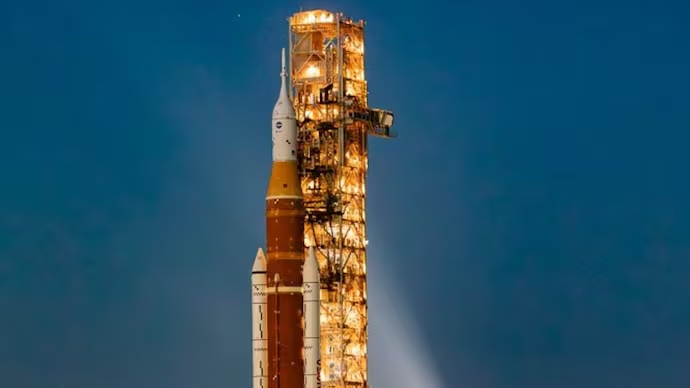
NASA has started a full-up “practice countdown” for Artemis II, a critical prelaunch rehearsal designed to validate procedures for fueling and running the clock down to just before ignition on the agency’s first crewed moon mission in more than half a century.
The two-day test - often described as a wet dress rehearsal - centers on loading the 322-foot Space Launch System with more than 700,000 gallons of super-cold propellant and then halting shortly before engine start. NASA says the countdown began ahead of a simulated launch window opening late Monday, Feb. 2, at Kennedy Space Center.
A recent “bitter cold spell” and near-freezing temperatures at the Florida launch site forced teams to slide the rehearsal timeline, which in turn moved the mission’s earliest launch opportunity. NASA’s latest planning guidance sets Sunday, Feb. 8 as the soonest Artemis II could lift off - not a confirmed launch date - pending successful completion of the fueling test and further readiness reviews.
Why the rehearsal matters
Artemis II is intended as the first crewed flight of the Orion spacecraft around the Moon, a roughly 10-day mission that would send four astronauts on a lunar flyby and return them to Earth for a Pacific splashdown. The mission would mark humanity’s first crewed lunar journey since Apollo 17 in 1972.
The crew - Commander Reid Wiseman, pilot Victor Glover, mission specialist Christina Koch, and Canadian mission specialist Jeremy Hansen - has been following preparations while in a preflight health stabilisation period in Houston, a standard measure to reduce illness risk in the final stretch before launch.
What happens next
NASA managers have emphasized that the fueling rehearsal is the key gate: completing tanking operations, running the countdown flow, and resolving any anomalies found in ground systems and vehicle interfaces will determine whether the agency can move into a near-term launch attempt within the early-February window.
For now, Feb. 8 stands as the earliest target on the calendar - subject to the outcome of the rehearsal, weather conditions, and final launch-readiness decisions.


