

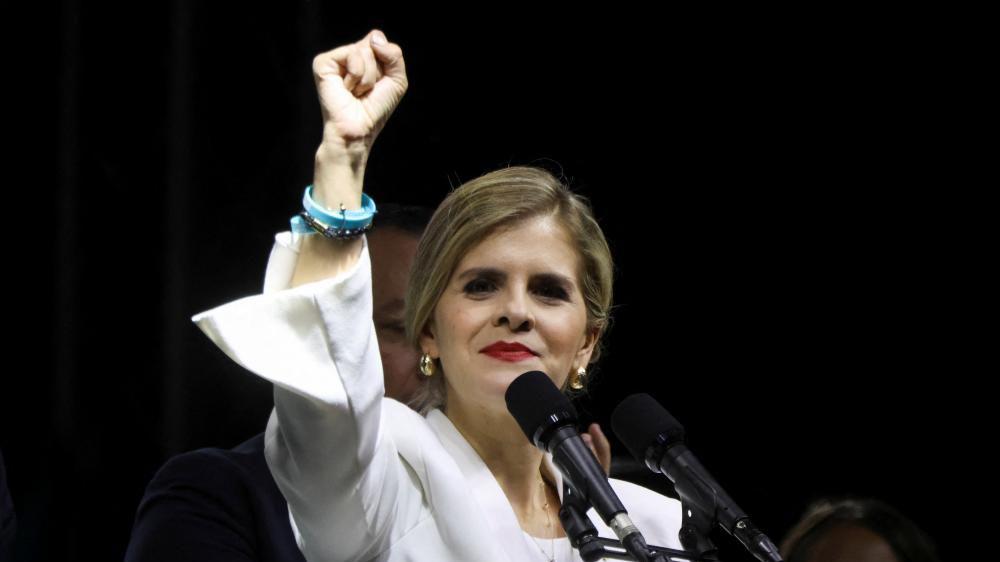
Costa Rica’s president-elect, Laura Fernández, has opened formal talks with El Salvador to explore adopting elements of its high-profile security strategy, as the traditionally peaceful nation confronts a surge in cartel-linked violence that has strained law enforcement and unsettled regional partners.
The move signals a notable policy shift for Costa Rica, which has long emphasized community policing and judicial reform over militarized crime-fighting approaches.
What Is Confirmed
Officials from Costa Rica’s foreign ministry and the president-elect’s transition team confirmed that preliminary discussions were held this week with Salvadoran counterparts to assess operational, legal, and institutional aspects of El Salvador’s security framework.
The talks are focused on information sharing, policing coordination, and judicial process reforms, rather than the immediate adoption of emergency powers or mass detention policies.
El Salvador’s approach - implemented under President Nayib Bukele - has drawn international attention for dramatically reducing homicide rates through an aggressive crackdown on gangs and organised crime, including expanded police and military deployments.
Why Costa Rica Is Looking South
Costa Rica has experienced a sharp rise in violent crime over the past two years, driven largely by its growing role as a transit corridor for cocaine trafficking between South America and North American markets.
Police data show increases in cartel-related homicides, extortion cases, and arms seizures, particularly in coastal regions and key logistics hubs. The trend has prompted public concern in a country that abolished its military in 1949 and built its international reputation on stability and civil governance.
Fernández’s campaign emphasized restoring public safety while preserving Costa Rica’s democratic and legal traditions - a balance that now defines the scope of the talks with El Salvador.
The Salvadoran Model - Results and Controversy
El Salvador’s security strategy has been credited by government figures with reducing gang violence and restoring control in areas previously dominated by criminal groups.
However, international human rights organizations and legal observers have raised concerns about due process, mass detentions, and prolonged states of emergency, arguing that the model risks eroding civil liberties.
Costa Rican officials said any policy transfer would be “selective and constitutional,” focusing on intelligence coordination, court efficiency, and police capacity-building rather than sweeping legal changes.
Regional and International Reaction
Regional security analysts view the talks as part of a broader Central American trend toward hardline anti-crime policies, as governments respond to increasingly transnational cartel networks.
Diplomats in Washington and Brussels said they are monitoring the discussions closely, noting that Costa Rica has historically served as a democratic counterweight in a region where security and governance models vary sharply.
What Fernández’s Team Says
In a statement, the president-elect’s office said the goal is to “learn from regional experiences that have produced measurable security gains, while maintaining Costa Rica’s constitutional protections and commitment to human rights.”
Officials emphasized that any future measures would be debated in the Legislative Assembly and subject to judicial review.
Why It Matters
If Costa Rica moves even partially toward El Salvador’s security framework, it would mark a significant shift in Central American governance, potentially reshaping how the region balances crime control with democratic norms.
The outcome could influence neighboring countries facing similar pressures from organized crime, positioning Costa Rica as a bellwether for whether hardline policies can be adapted within a long-standing liberal democratic system.


