

Some cars arrive fully formed, impressive but isolated. Others go further. They establish a set of values so coherent, so resilient, that an entire company bends itself around them. In the modern automotive industry, with its platform sharing and modular strategies, this kind of singular gravitational force is rare. One of the clearest examples remains the Porsche 911.
To understand the significance of the 911, you have to look beyond sales figures or performance benchmarks. Its importance lies in how thoroughly it defined what Porsche would become, not just as a manufacturer of sports cars, but as a philosophy in metal, rubber, and engineering stubbornness.
An Unlikely Foundation
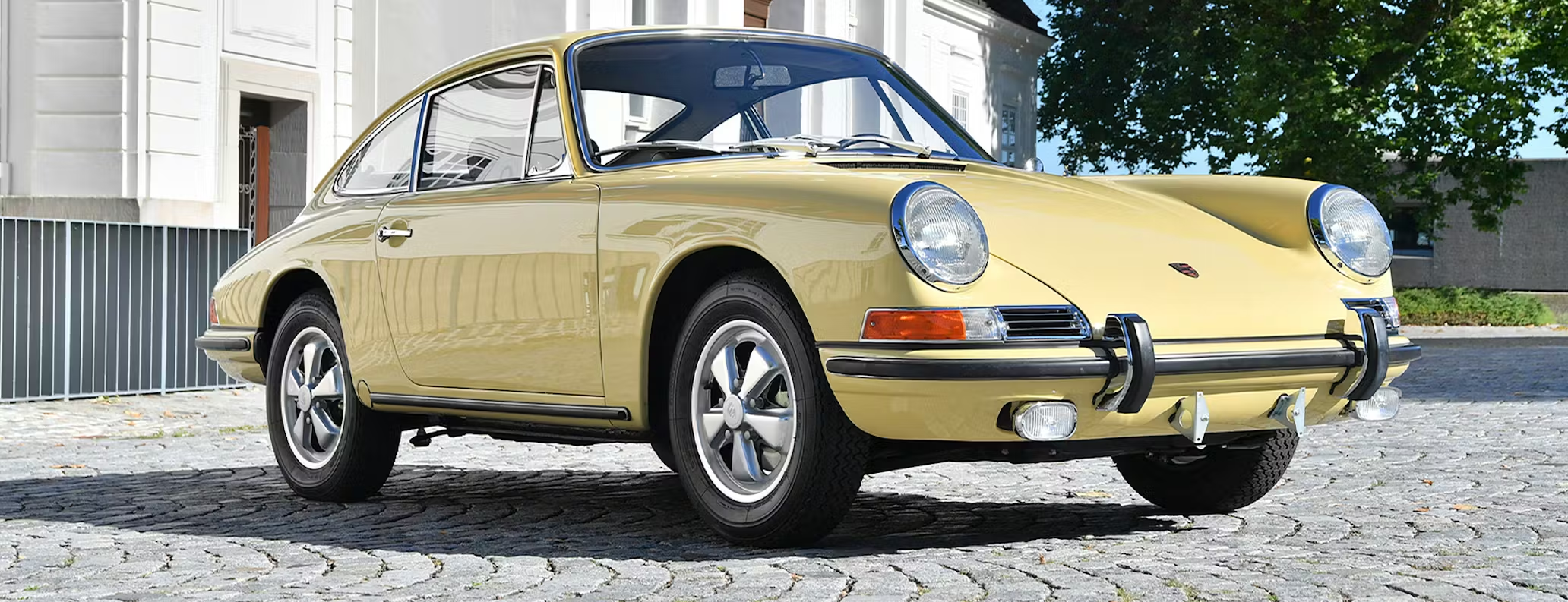
When the 911 debuted in 1963, it was not conceived as a brand cornerstone. It was intended as a successor to the 356, larger, more powerful, and more refined, but still recognisably a rear-engined sports car. The layout itself was already questionable. By conventional engineering logic, placing the engine behind the rear axle compromised weight distribution and handling stability.
Yet Porsche persisted, guided by a belief that engineering challenges were to be solved, not avoided. The company’s early leadership, shaped by the thinking of Ferdinand Porsche and later his son Ferry, viewed continuity as a strength. The 911 embodied that belief from the start. Its flat-six engine, compact dimensions, and distinctive silhouette were not marketing decisions. They were expressions of internal logic.
That logic would soon define the company.
Evolution Without Abandonment
Most manufacturers treat generational change as an opportunity to reset. Porsche did the opposite. Over six decades, the 911 evolved continuously, but almost never fundamentally. The roofline remained recognisable. The rear engine stayed put. The driving position, the sense of mechanical intimacy, and the focus on steering feel endured even as power outputs doubled and then tripled.
This continuity became a cultural asset. Customers learned that buying a new 911 did not mean abandoning the old one’s values. Engineers learned that improvement came through refinement, not reinvention. Even when water cooling replaced air cooling in the late 1990s, a change that initially unsettled purists, the transition was framed as necessary evolution rather than philosophical surrender.
In doing so, Porsche avoided a trap that has claimed many sports car makers. The 911 never became a retro exercise, nor did it chase trends that conflicted with its identity. It simply absorbed technology on its own terms.
A Technical North Star
As Porsche expanded its lineup, first with the transaxle cars, then later with SUVs and electric vehicles, the 911 remained the reference point. Steering feel across the range was judged against it. Brake pedal calibration echoed it. Even the way interiors balanced ergonomics with restraint drew from 911 precedent.
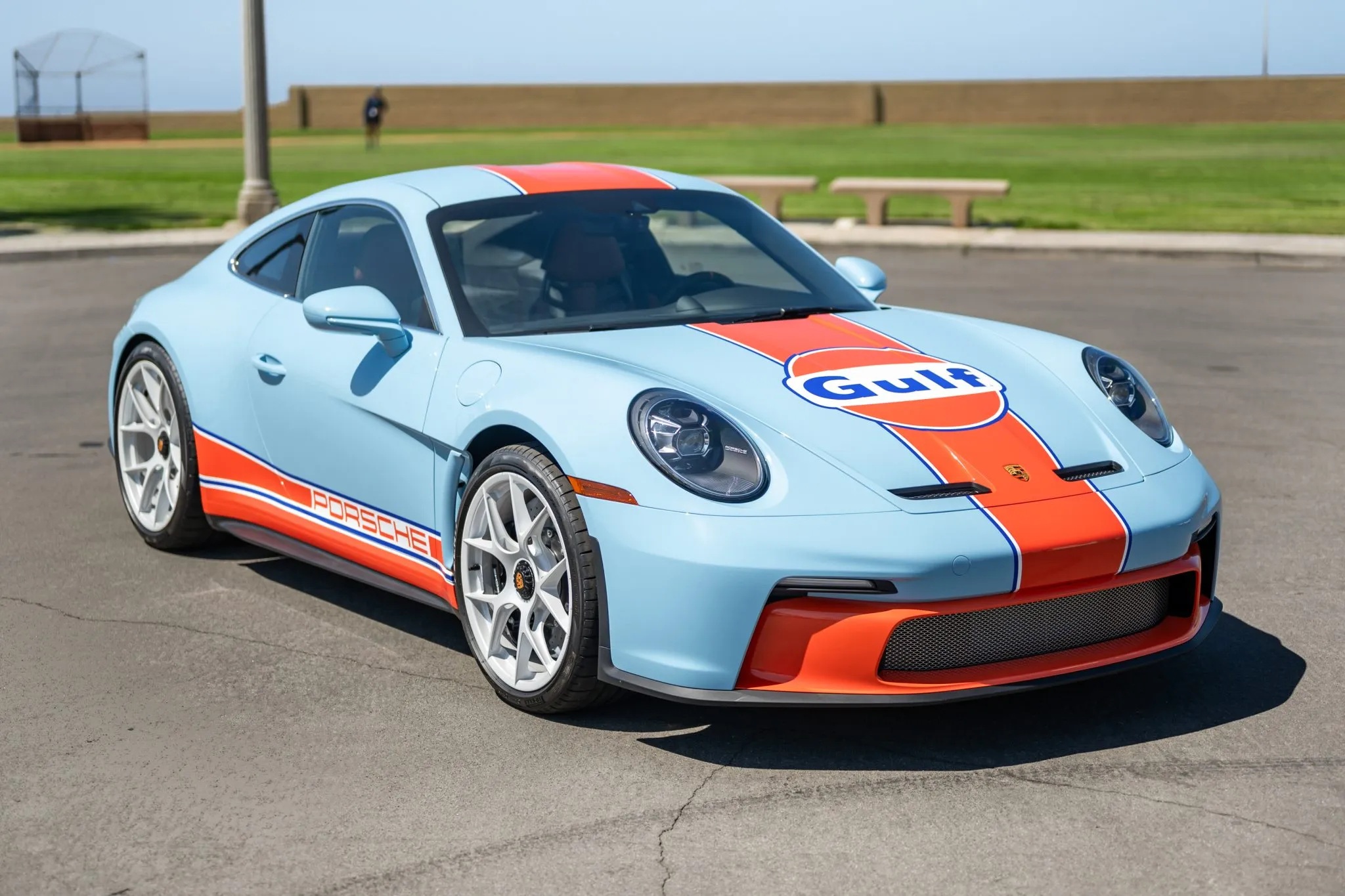
Crucially, motorsport reinforced this influence. From endurance racing to rally stages, variants derived from the 911 proved competitive far beyond what their configuration suggested was possible. Each success strengthened the internal narrative that unconventional decisions, if pursued rigorously, could outperform orthodox thinking.
This had a feedback effect. Engineers hired by Porsche were not just asked to design fast cars. They were asked to understand why the 911 worked, and how its lessons could be applied elsewhere. The model became an internal educational tool as much as a product.
Brand Trust Built Over Decades
The 911 also shaped how customers perceived Porsche. Owners came to expect a certain honesty from the brand. Controls would feel mechanical rather than artificial. Performance claims would translate to real-world capability. Even luxury would be functional, oriented around driving rather than spectacle.
That trust allowed Porsche to take risks elsewhere. When the Cayenne launched in the early 2000s, it faced scepticism. Yet the existence of the 911 reassured buyers that Porsche had not lost its way. The sports car remained, uncompromised and continuously improved. Everything else was framed as supporting its survival, not replacing it.
Few models have provided that kind of insurance policy.
The Danger of Over-Reliance
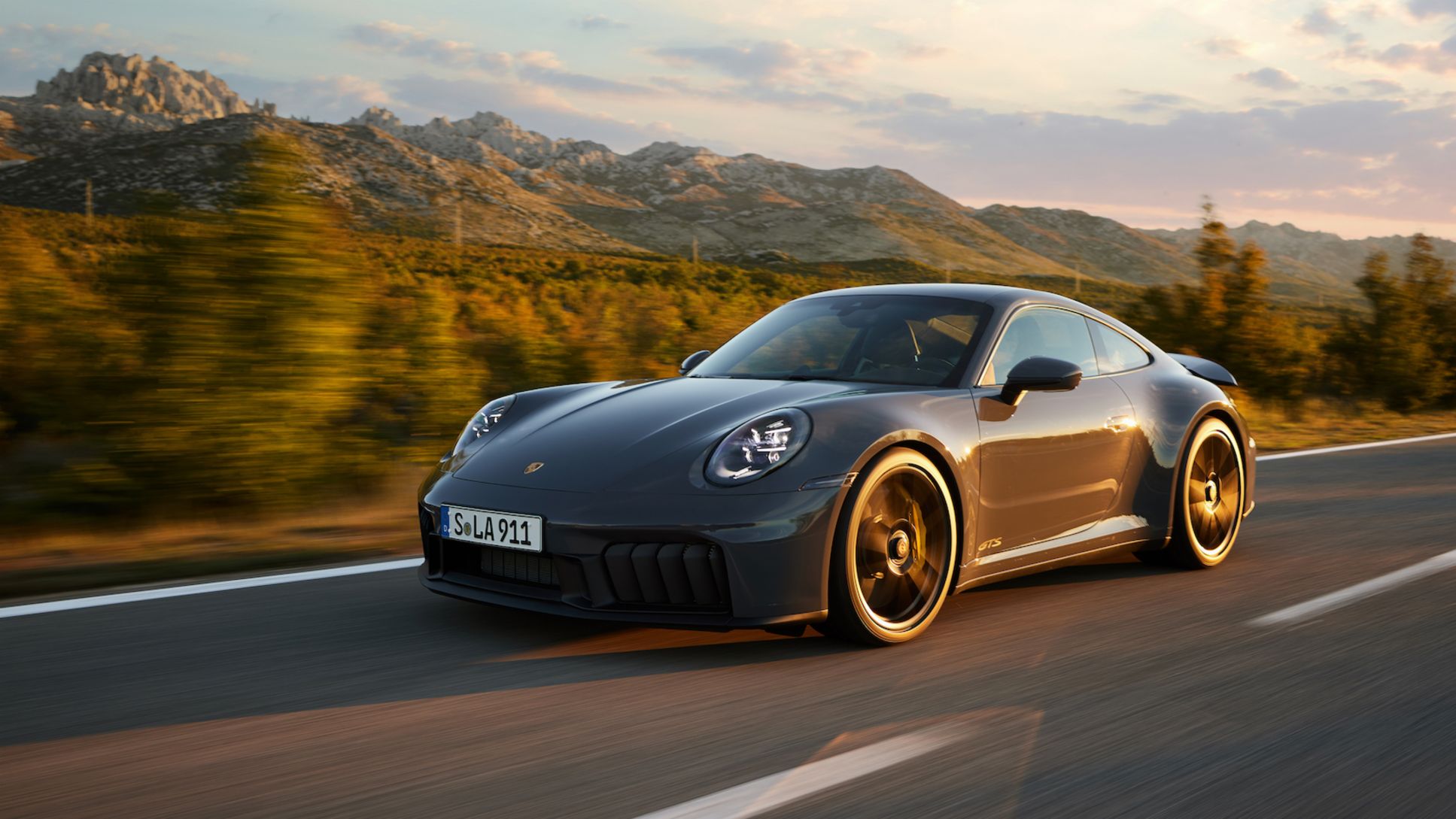
Defining a brand so completely around a single model is not without risk. Internal debates at Porsche have repeatedly questioned how long the 911 can continue in its traditional form, especially under emissions regulation and electrification pressure. The challenge is existential. Change too much, and the anchor is lost. Change too little, and relevance erodes.
What sets Porsche apart is its willingness to confront that tension openly. Hybridisation of the 911 has been discussed not as a betrayal, but as a continuation of its problem-solving ethos. The goal is not to preserve a configuration at all costs, but to preserve a mindset.
That distinction matters.
More Than a Car
The 911 is not simply Porsche’s most famous product. It is the framework through which the company understands itself. It taught Porsche how to evolve without erasing history, how to turn technical disadvantage into character, and how to build long-term credibility in a volatile industry.
Many brands can point to a successful model. Few can point to one that shaped their engineering culture, customer relationship, motorsport identity, and corporate confidence so completely.
The 911 did not just define Porsche. It taught Porsche how to remain Porsche.


