

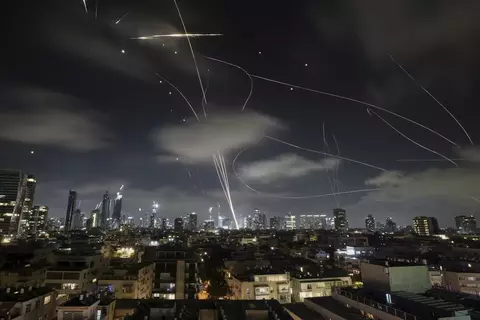
Military authorities and international monitoring groups reported renewed overnight use of drones and missiles across at least two active conflict theaters, underscoring the growing centrality of long-range, relatively low-cost strike systems in modern warfare. Air defense systems were activated in several urban areas, with early reports indicating infrastructure damage and limited confirmed casualties. Independent verification is ongoing, and some claims remain disputed by opposing sides.
Latest Developments
Because the situations remain fluid, officials have stressed caution in interpreting early figures. Military communiqués issued overnight described waves of unmanned aerial vehicles and missile launches, followed by defensive interceptions over or near major population centers. In several cases, authorities acknowledged that damage assessments were preliminary and subject to revision as daylight inspections and third-party verification continue.
In at least one theater, emergency services reported strikes or falling debris affecting residential or industrial infrastructure. In another, officials said air defenses intercepted multiple incoming systems, though they did not provide a full accounting of what penetrated defenses versus what was destroyed mid-air. Independent observers, including open-source analysts and satellite imagery providers, have not yet released comprehensive assessments confirming the scale of damage.
Context: a pattern, not an anomaly
The reported exchanges fit a broader pattern seen across contemporary conflicts, including the war involving Ukraine and Russia, as well as recurrent regional escalations in the Middle East involving Israel and Iran. Over the past several years, drones and various missile types have shifted from niche capabilities to routine tools of state and non-state militaries alike.
Several factors drive this trend. Armed drones are cheaper to produce and deploy than many traditional aircraft, can be launched in large numbers, and are difficult to counter completely even with advanced air defense systems. Cruise and ballistic missiles, meanwhile, offer speed and range that can bypass or overwhelm defenses when used in coordinated salvos. Together, these systems enable actors to strike deep into adversary territory with limited risk to pilots and, in some cases, limited political cost.
What is confirmed, and what is disputed:
Confirmed elements include the activation of air defense systems in urban areas and the use of drones and missiles as primary strike tools during the reported overnight period. Multiple official statements acknowledge infrastructure damage, though most avoid detailed breakdowns pending further assessment.
Disputed or unverified elements center on casualty figures, the precise number of incoming systems, and the effectiveness of interceptions. In several conflicts, opposing sides routinely issue sharply different accounts of the same events, each emphasizing either defensive success or offensive impact. Independent verification — through satellite imagery, geolocated videos, or on-the-ground inspections by neutral organisations - often lags initial claims by hours or days.
Analysts caution that early casualty numbers are particularly unreliable. Injuries may be reported before deaths are confirmed, and infrastructure damage can later be reassessed as more severe or more limited than first believed.
Urban defenses under strain
One consistent feature across theaters is the increasing strain on air defense networks. Urban air defenses are designed to protect critical infrastructure and population centers, but they face challenges when confronted with large numbers of low-flying drones, mixed with faster and more complex missile threats.
Defenders must make rapid decisions about which targets to intercept, balancing the cost of interceptors against the perceived threat of each incoming object. In dense urban environments, even successful interceptions can produce falling debris that damages buildings or injures civilians, complicating claims of “successful defense.”
Military planners note that this dynamic favors attackers who can launch systems cheaply and in volume, forcing defenders into expensive and resource-intensive responses.

Strategic implications
The normalization of drone and missile exchanges carries significant strategic risks. First, it lowers the threshold for long-range strikes, making escalation more likely during periods of heightened tension. Second, it increases the danger of miscalculation, particularly when attacks occur near or across borders where external powers have interests or forces deployed.
In regions with overlapping alliances and rivalries, even limited strikes can trigger broader responses if misinterpreted as preparation for a larger offensive. This risk is amplified when attribution is unclear - for example, when drones resemble commercially available systems or when responsibility is denied.
Humanitarian and economic consequences
Beyond immediate military effects, repeated air alerts and strikes have cumulative humanitarian impacts. Disruptions to electricity, water, transportation, and health services can persist long after the attacks themselves. Even when casualties are limited, the psychological toll on civilian populations living under recurring threat is significant.
Economically, sustained drone and missile exchanges increase costs for both attackers and defenders. Governments must invest heavily in air defence, early-warning systems, and infrastructure repair, diverting resources from other priorities.


