

Update (16:00 GMT):
Following the joint military offensive by the United States and Israel against Iran, combat operations remain ongoing across multiple theatres. President Donald Trump has described the campaign as “major combat operations”intended to degrade Iran’s military capabilities and nuclear programme, while calling on the Iranian populace to rise up against their leadership.
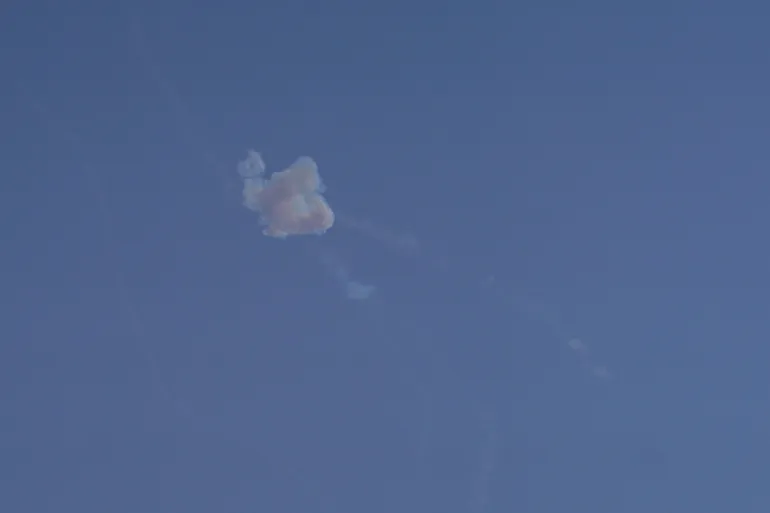
Smoke in Doha’s sky as Qatar intercepts Iranian missiles
Iran has launched retaliatory missile and drone strikes targeting Israeli territory and U.S. forces and bases across the Gulf region, including in Bahrain, Qatar, Kuwait, the United Arab Emirates and Saudi Arabia. Explosions and air-raid sirens have been reported in several Gulf capitals, and air-defence systems in multiple countries are actively intercepting incoming threats.
Civilian Impact and Regional Disruption
The conflict’s effects have spread beyond combat zones. Civilian airspace across at least eight countries - including Iran, Israel, Jordan, Qatar and neighbouring Gulf states - has been closed as a safety measure, disrupting global commercial flights. Major airports such as Dubai International and Dubai World Central have suspended operations, with cancellations and diversions extending to Europe and beyond.
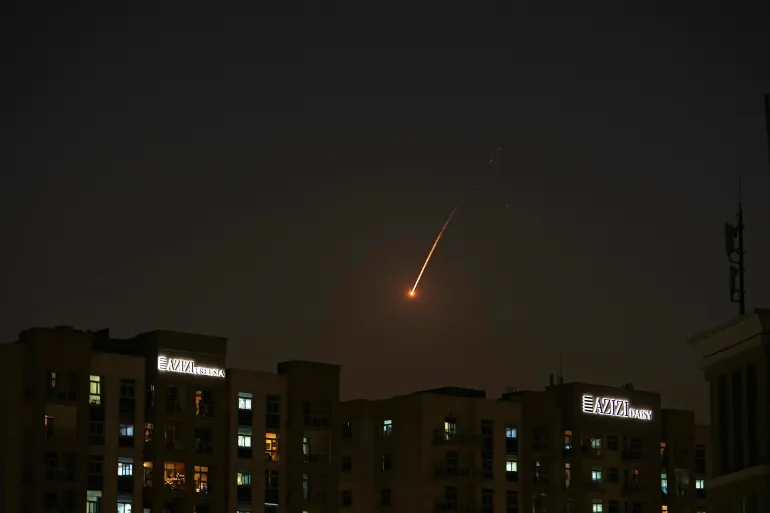
The flare of a projectile is seen over the skyline of Dubai, United Arab Emirates
Additionally, Israel’s energy sector has temporarily shut down portions of its offshore natural gas production due to security concerns linked to the strikes and ensuing retaliation, although authorities have assured that essential supplies will be maintained through alternative arrangements.
International Responses and Diplomatic Pressure
Global diplomatic reactions are intensifying. The European Union has urged maximum restraint, while regional mediators such as Oman have publicly cautioned against deeper foreign entanglement in the conflict.
Russia has condemned the U.S.–Israel strikes on Iran as an “unprovoked act of armed aggression”, warning that the attacks undermine regional stability and international law, and has voiced support for Iran’s call for an emergency United Nations Security Council session.
Meanwhile, the United Nations Secretary-General António Guterres has condemned escalating hostilities, emphasising that military actions in the region risk undermining global peace and calling on all parties to abide by international law.
Casualty Reports and Humanitarian Concerns
Independent casualty figures remain difficult to verify amid the fluid conflict. Iranian state media and allied sources claim significant damage in Tehran and other cities, citing civilian losses including schoolchildren, and state officials have reported widespread impacts on infrastructure. However, these figures have not been independently confirmed by international organisations or neutral observers.
Update (10:00am GMT):
In the hours following the coordinated strikes earlier in the day, United States and Israeli forces have continued military action against Iran, with explosions reported across Tehran and other areas in the country. Both nations describe the operation as part of an effort to counter perceived threats posed by Iran’s nuclear and missile programmes. Iran’s leadership has vowed retaliation as the conflict carries on.
Iran’s Islamic Revolutionary Guard Corps (IRGC) has launched a wave of missile and drone attacks toward Israel, prompting nationwide air-raid sirens and the activation of Israeli air-defence systems. Israeli authorities have instructed civilians to seek shelter as Iranian strikes continue to be intercepted over parts of the country.
Amid the hostilities, sirens have sounded beyond Israel’s borders, with alerts and reports of explosions in neighbouring countries including Jordan and in Gulf states such as Qatar and Bahrain, where Iranian attacks reportedly targeted U.S. military assets. Several nations’ airspace has been temporarily closed to civilian traffic as a precaution.
Political leaders on both sides have issued public statements reinforcing their positions. Israeli Prime Minister Benjamin Netanyahu has defended the operation - referred to domestically as “Operation Lion’s Roar” - emphasising the need to prevent Iran from developing nuclear weapons, while U.S. leadership has characterised the campaign as aimed at dismantling Iran’s military infrastructure.
The Indian government has issued a formal advisory urging Indian citizens in the region to exercise “utmost caution” and follow instructions from local authorities, reflecting the heightened risk to foreign nationals amid ongoing military exchanges.
In one of the most serious escalations in Middle Eastern geopolitics in decades, Israel and the United States launched coordinated military strikes against targets in the Islamic Republic of Iran on Saturday, February 28, 2026, marking a dramatic intensification of an already volatile confrontation.
The offensive, characterised by Israel as a pre-emptive strike, saw explosions reported in Tehran and other Iranian cities as both nations sought to degrade what they describe as imminent threats posed by Tehran’s nuclear and ballistic missile programmes.
Scope of the Strike
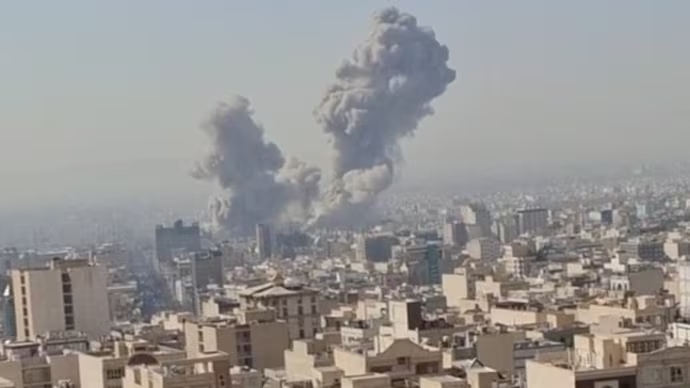
According to multiple independent reports, the strikes involved a range of air and missile attacks against Iranian military infrastructure and regime sites in Tehran, Qom, Isfahan, Karaj, and Kermanshah. Videos and photographs circulating on social media and in global media outlets showed plumes of smoke rising over central Tehran, and sirens sounded both within Iran and across Israel amid heightened alert statuses.
Israeli officials, including Defence Minister Israel Katz, described the military operation as a “pre-emptive attack” intended to neutralise perceived threats to Israel’s national security. In response, Israel declared a state of emergency, closed its airspace to civilian flights, and issued civil defence alerts advising the public to remain near protective shelters.
U.S. government officials confirmed that American military assets participated in the coordinated offensive, although precise details regarding the scope and nature of U.S. involvement remain incomplete, with senior administration figures describing the action as “major combat operations” against Iranian targets.
Political and Strategic Context
The strikes follow months of heightened tensions between the West and Iran, driven in large part by longstanding disputes over Iran’s nuclear programme and ballistic missile development. Diplomatic efforts earlier this year - including rounds of negotiations in Geneva and Muscat - failed to produce a breakthrough, particularly on linking missile constraints with nuclear limitations.
The current escalation is deeply rooted in a pattern of intermittent confrontations over the last several years. In June 2025, a 12-day conflict erupted after Israel launched deep strikes into Iranian territory, drawing significant Iranian missile retaliation and involving direct U.S. military engagement. That campaign ended with an uneasy ceasefire but left unresolved tensions and weakened diplomatic channels.
Iran’s Response and Regional Impact
At the time of reporting, Iranian authorities have acknowledged explosions but have not released detailed casualty figures or statements describing the full extent of the damage. Tehran’s state media confirmed the blasts in the capital while offering limited information on precise targets or losses.
Analysts caution that Iran is likely to weigh options for retaliation, including ballistic missile and drone counter-strikes, which could further widen the conflict. This concern has prompted airspace closures in multiple countries and high alert levels among regional militaries.
The Indian government has also issued advisories urging Indian nationals in the region to exercise “utmost caution” due to rapidly escalating security risks.
International Reactions and Diplomatic Response
Global leaders and international organisations have expressed profound concern, with calls for restraint and a return to diplomatic engagement. The United Nations nuclear watchdog has underscored ongoing challenges in monitoring Iran’s nuclear activities, noting gaps in verification of restricted sites and highlighting the risk that loss of oversight poses to international non-proliferation efforts.
European and Middle Eastern diplomatic channels are reportedly evaluating options to prevent broader regional conflict, but as of now, the situation remains highly volatile.
Looking Ahead
The repercussions of the February 28 strikes will likely extend beyond immediate military engagements. If escalation continues, critical global issues - including energy supply security through the Strait of Hormuz, regional alliances, and nuclear proliferation norms - may be profoundly affected.
For the latest developments and government statements, refer to real-time reporting from established international news agencies and official diplomatic communications.


