

U.S. Vice President JD Vance’s diplomatic trip to Armenia this week was overshadowed by backlash after a social media post from his official account referencing the Armenian genocide was deleted, prompting criticism from advocacy groups and renewed debate over U.S. messaging on one of the most politically sensitive issues in the region.
The controversy began during Vance’s visit to the Tsitsernakaberd memorial in Yerevan, where he paid tribute to victims of the mass killings of Armenians during the final years of the Ottoman Empire. A post from his account described the visit as honoring victims of the “Armenian genocide,” but it was removed shortly afterward, with the White House later attributing the message to a staff error.
The deletion drew criticism from Armenian-American organizations and observers who viewed the move as diplomatically cautious but morally troubling. Critics argued that removing the term undermined recognition of the historical tragedy and sent mixed signals about U.S. policy.
A politically sensitive word
The dispute centers on terminology with long-standing geopolitical implications. While many countries and scholars recognize the 1915 mass killings as genocide, Turkey - a key NATO ally of the United States - rejects the label and maintains the deaths occurred during wartime conflict rather than a systematic campaign.
U.S. policy itself has been inconsistent across administrations. Congress and former President Joe Biden formally recognized the killings as genocide in 2021, but subsequent political messaging has remained cautious given strategic ties with Ankara.
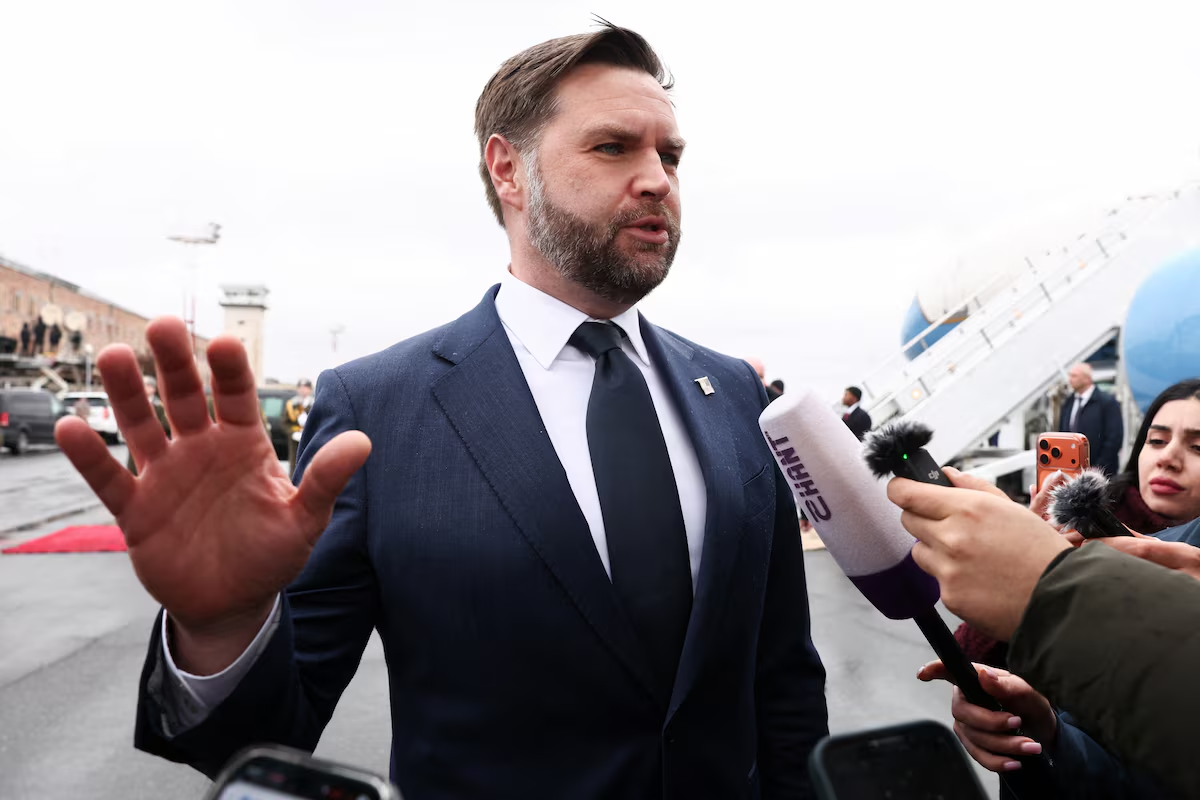
Vance, during his public remarks in Armenia, avoided using the term directly, instead emphasizing cultural respect and bilateral ties. Officials later said his personal comments - rather than the deleted post - best reflected his position.
First visit, broader diplomatic aims
The incident unfolded during a landmark trip: Vance became the first sitting U.S. vice president to visit Armenia, part of a broader regional tour also including Azerbaijan.
The visit was tied to Washington’s efforts to strengthen ties in the South Caucasus, support economic cooperation and energy projects, and encourage progress toward a U.S.-backed peace framework between Armenia and Azerbaijan.
Officials also announced agreements focused on infrastructure and strategic cooperation, underscoring the geopolitical stakes of the trip beyond symbolic diplomacy.
Political fallout and messaging scrutiny
The deleted post has intensified scrutiny of the administration’s communications strategy. It marked at least the second social media controversy involving senior officials in recent days, raising questions about oversight and diplomatic sensitivity in public messaging.
Analysts say the episode illustrates the balancing act Washington faces: acknowledging historical grievances while maintaining relations with Turkey and navigating regional power dynamics. The rapid removal of the post, they argue, reflects the enduring weight of the genocide recognition debate in U.S. foreign policy.
For Armenian communities, however, the episode has reinforced concerns that recognition remains politically conditional. For U.S. policymakers, it underscores how a single phrase - posted and then deleted - can ripple across diplomacy, domestic politics and historical memory.


