

Years after Myanmar’s February 2021 coup, National Unity Government still claims a mandate from the country’s last broadly contested election. But a widening set of pro-democracy critics - including activists, analysts, and some supporters inside the resistance ecosystem - are warning that the parallel administration is drifting toward political irrelevance unless it reforms fast, clarifies its wartime governance model, and proves it can convert popular legitimacy into durable authority on the ground.
The warning signs are not just rhetorical. Myanmar’s conflict has evolved into a complex patchwork of resistance coalitions, ethnic armed organizations, and local administrative structures, many of which operate with only loose coordination. Researchers tracking de facto control and local governance describe an increasingly fragmented landscape where “who governs” varies village by village - and where the opposition’s greatest strategic challenge may be political coherence rather than battlefield momentum.
A legitimacy gap that keeps widening
The NUG was formed in April 2021 by ousted lawmakers and allies after the military seized power, presenting itself as the legitimate continuation of Myanmar’s elected government. Yet the junta’s State Administration Council has retained control of core state institutions - including the bureaucracy, heavy weaponry, and major urban nodes - while the country’s political centre of gravity has shifted into armed resistance and localised governance.
That mismatch creates what one analysis calls a struggle between de facto and de jure power: the military wields institutional force but lacks broad legitimacy; the NUG holds symbolic legitimacy but faces obstacles translating it into enforceable, unified governance.
The junta has repeatedly tried to manufacture legitimacy through elections and political “roadmaps.” In late January 2026, regional reporting described Myanmar concluding a widely denounced vote expected to entrench the military’s proxy party - amid exclusions of opposition forces and ongoing violence. Association of Southeast Asian Nations officials, meanwhile, have continued to publicly question the credibility of the junta’s political process while clinging to a peace plan that has not stopped the war.
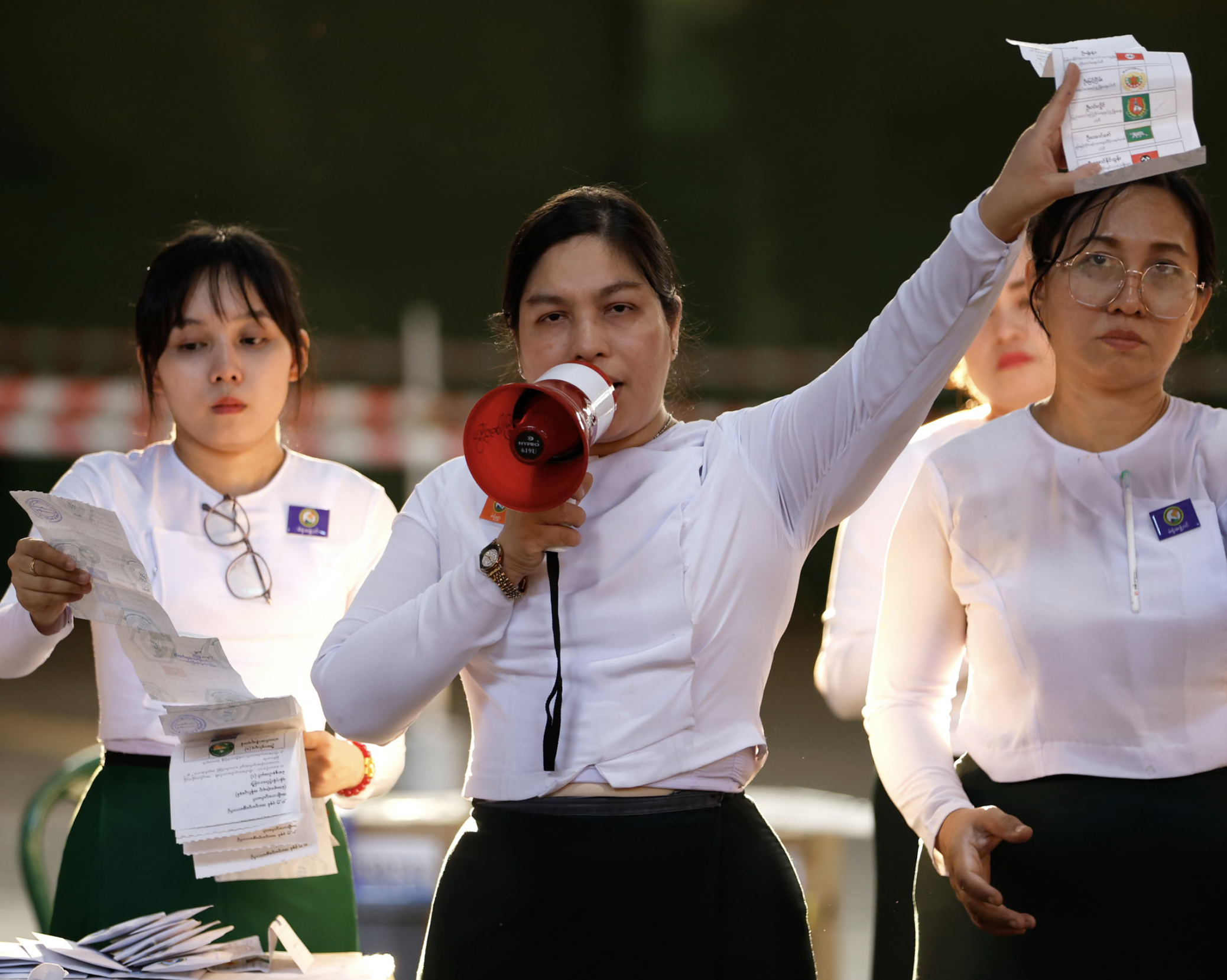
For NUG critics, that diplomatic limbo cuts both ways: the junta struggles to gain recognition, but the NUG has not achieved the international breakthrough that might elevate it from “shadow government” to a government-in-waiting with consistent external backing.
The internal critique: “inefficiency,” reform delays, and trust erosion
The sharpest criticism now comes from within the broader pro-democracy camp. A detailed account published in December 2025 described a surge of internal frustration, including allegations of inefficiency and slow or inadequate response to calls for structural reform - with critics arguing that ministerial sprawl and unclear lines of command have weakened the NUG’s credibility in a fast-moving war.
A separate critique published in August 2025 argued that the NUG appeared “directionless” to parts of its own support base, and that supporters living through the conflict had expected a more effective wartime administration after years of upheaval.
These critiques matter because the NUG’s most valuable asset - absent control of the formal state - is trust: from Myanmar’s public, from resistance forces, and from diaspora communities financing elements of the opposition ecosystem. Once trust fractures, revenue and compliance can follow.
Governance on the ground: where the state collapsed, local systems filled the gap
Even sympathetic analysts emphasize how uneven governance has become. Research from ISEAS – Yusof Ishak Institute describes NUG-aligned areas where local “people’s” administrative and security teams collect taxes and run basic services - but also highlights how these arrangements vary significantly and depend on local power balances and wartime capacity.
Meanwhile, a 2024 update by the Special Advisory Council for Myanmar on “effective control” underscores that large parts of Myanmar are contested or outside firm junta administration, recommending cross-border humanitarian delivery and stronger governance structures in non-regime areas - a point that implicitly raises the stakes for how the NUG and allied forces govern where the junta cannot.
This is the paradox at the centre of today’s “irrelevance” warning: the NUG risks being sidelined not only by the junta, but by the very decentralisation the uprising produced - as local administrations and armed groups build their own chains of authority.
International diplomacy: ASEAN’s slow motion, and the NUG’s limited leverage
Regional diplomacy has offered few clean wins. ASEAN has kept Myanmar’s generals at arm’s length in top-level forums, but its flagship “five-point consensus” has failed to end the violence, and member states remain divided on strategy.
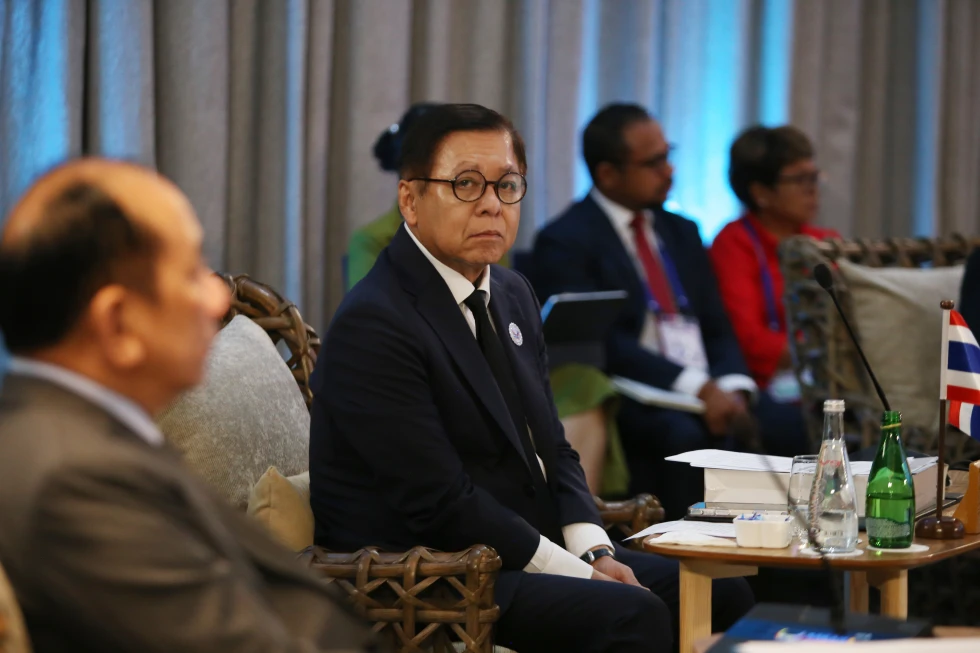
In that context, the NUG has tried to position itself as a necessary interlocutor. NUG statements and aligned civil-society readouts around an ASEAN “stakeholder engagement” in late January 2026 reflect ongoing efforts to reject the junta’s electoral claims and push for a more inclusive regional approach. But these forums do not equal recognition — and critics argue that without a sharper diplomatic strategy and clearer internal cohesion, the NUG risks being treated as one actor among many, rather than the political centre of the anti-coup movement.
Money, legitimacy, and accountability
Funding is another pressure point. The NUG and resistance ecosystem have relied heavily on diaspora support and fundraising mechanisms, in part because formal channels for external assistance remain constrained. Public discussions of NUG financing — including digital payment initiatives and war-bond style fundraising — point to meaningful resource mobilization, but also to the growing need for transparent controls and credible oversight.
As the war drags on, allegations of corruption or abuse — whether verified or not — can be strategically devastating, because they erode compliance in areas where authority is voluntary and reputation-driven.
The humanitarian backdrop raises the stakes
The relevance debate is unfolding against a severe humanitarian crisis. World Food Programme programming documents describe a country battered by conflict, displacement, and economic turmoil, with very large populations requiring assistance and widespread food insecurity.
This matters because the NUG’s claim to legitimacy is ultimately a claim to govern — not just to oppose. Critics say that unless the NUG can demonstrate credible service delivery (directly or via coordinated partners), it will struggle to convince war-weary communities that it represents a workable alternative state, rather than a distant political brand.
The counterargument: why some say the NUG is still central
Not everyone accepts the “irrelevance” framing. Pro-NUG voices argue that the parallel government has achieved what once seemed impossible in Myanmar politics: creating a cross-ethnic coalition narrative, expanding resistance capacity, and helping legitimize alternative governance in areas outside junta reach.
That view holds that “messy” governance is an inevitable feature of a revolutionary war — and that the key test is whether the opposition can sustain coordination long enough to force a political settlement.
What would “relevance” look like now?
Across the critiques and defenses, a rough consensus emerges on what the NUG would need to do to avoid strategic marginalization:
Clarify command-and-coordination across resistance forces and local administrations, including enforceable standards for civilian protection and dispute resolution.
Streamline governance structures so that decision-making is faster and responsibilities are clear — a direct response to internal criticism about inefficiency and reform paralysis.
Professionalize transparency and auditing for fundraising and expenditures to protect the movement’s core asset: trust.
Build a sharper diplomatic offer to regional actors, especially ASEAN states looking for a plausible pathway beyond the stalled peace plan.
The deeper reality is that Myanmar’s opposition is not fighting a conventional contest for the capital; it is fighting a long war over political legitimacy, governance capacity, and international patience. In that kind of struggle, irrelevance doesn’t arrive as a single defeat — it arrives when people stop coordinating, stop paying, stop listening, and quietly build alternatives.
And for the NUG, critics warn, that risk is no longer theoretical.


