

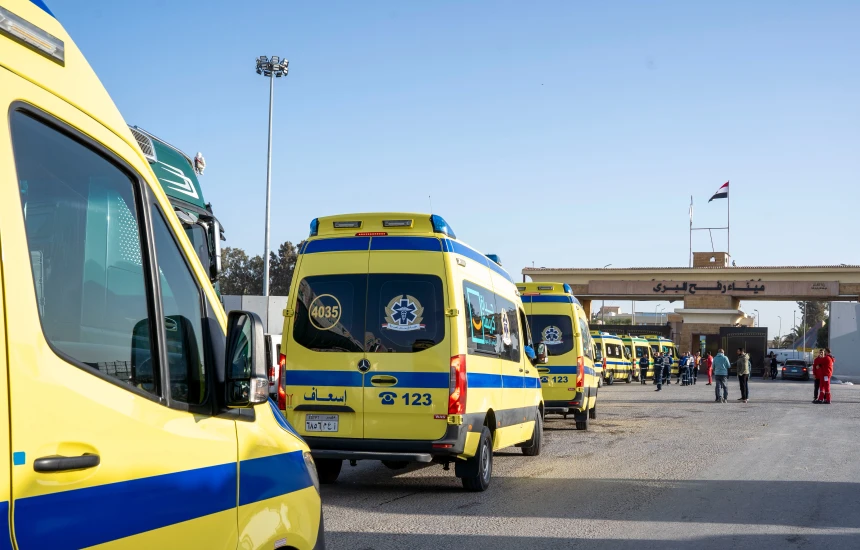
The Rafah border crossing between the Gaza Strip and Egypt is expected to reopen on Monday for limited passenger movement, ending a near two-year period in which the gateway was largely shuttered and, since mid-2024, controlled by Israel on the Gazan side.
Officials said the initial phase is focused on humanitarian travel - particularly patients in need of urgent medical treatment abroad - and on allowing some Palestinians who left during earlier phases of the war to return. The reopening will be supervised by European Union border personnel and is subject to stringent vetting by both Israel and Egypt, according to Israeli and European officials.
A phased reopening after long closure
Rafah, long viewed by Palestinians as Gaza’s primary gateway to the outside world not routed through Israel, had been a critical channel for travel and, at times, humanitarian access before the war. It has been largely closed since Israeli forces seized the area in May 2024, leaving exit options severely constrained and adding pressure on an already overwhelmed health system.
Israel’s military coordination body, COGAT, has described the reopening as a controlled pilot intended to test procedures and build readiness for fuller operations. Israeli and European sources cited by Reuters said the reopening would begin with foot traffic only, with operations coordinated among Israel, Egypt and the EU mission.
The Associated Press reported that no goods would be allowed through initially, emphasising that the reopening is limited to people rather than cargo - an important distinction given that Gaza’s broader humanitarian supply flows typically depend on separate arrangements and inspection regimes.
Who can cross, and how many?
Initial capacity figures vary across official accounts, underscoring how tightly managed and changeable the first days may be.
Reuters reported that officials expect most travelers to be patients seeking urgent treatment abroad, citing an estimate that about 20,000 patients are awaiting exit, with an initial flow of roughly 200 people exiting per dayand 50 returning to Gaza, subject to approvals.
AP, citing Israeli statements, reported a smaller initial allowance of 50 patients per day, each accompanied by two relatives, alongside about 50 returns per day of people who had left earlier in the war.
Both accounts agree on the core operational structure: travellers will be vetted through coordinated lists, with Israel retaining a security-screening role and the EU mission overseeing border procedures at the crossing itself.
Security screening and political backdrop
The reopening is unfolding amid a fragile ceasefire environment and ongoing international scrutiny of the humanitarian situation in Gaza. Reuters linked the move to the wider political framework being promoted by the United States, while noting continued violence and contested narratives around compliance and enforcement.
AP, meanwhile, reported that preparations for the reopening coincided with deadly Israeli strikes that drew renewed international calls for restraint - highlighting the tension between limited humanitarian measures and the persistence of lethal military activity.
Why Rafah matters
For Gaza residents, Rafah is more than a border post: it is the principal outlet for medical referrals, family reunification travel and humanitarian evacuations when other pathways are blocked or tightly restricted. Even a narrowly scoped reopening can reduce pressure on hospitals by enabling transfers of critical cases that cannot be treated locally.
But the limitations also matter. If the crossing remains restricted to passenger movement only, it will not, by itself, resolve wider shortages of fuel, medical supplies and basic goods - needs typically addressed through separate aid corridors and inspection systems.


