

The global semiconductor industry is bracing for a sharp imbalance in the memory market, with leading analysts and supply-chain consultancies warning that DRAM prices could surge by 70–100% in 2026 as artificial intelligence infrastructure spending overwhelms capacity and diverts supply away from the automotive sector.
The projected squeeze reflects a collision between two fast-growing demand streams: hyperscale cloud providers racing to expand AI training and inference clusters, and car manufacturers increasingly reliant on high-performance memory for advanced driver-assistance systems (ADAS), infotainment and software-defined vehicle platforms.
Why DRAM is becoming the bottleneck
DRAM - dynamic random-access memory - is a critical component in both AI servers and modern vehicles, but the scale and urgency of data-center demand has fundamentally shifted the market’s balance.
AI accelerators from companies such as Nvidia and AMD require large pools of high-speed system memory to feed massive parallel workloads. Hyperscalers, including Amazon Web Services, Microsoft Azure, and Google Cloud, have collectively announced multi-billion-dollar capital expenditure plans aimed at expanding AI-capable data centers through 2026 and beyond.
Market research firms such as TrendForce and Counterpoint Research have reported that server-grade DRAM shipments are growing at a significantly faster pace than automotive-grade memory, with suppliers prioritizing higher-margin enterprise contracts as fabrication capacity remains constrained.
Capacity limits and strategic production shifts
The world’s three dominant DRAM manufacturers - Samsung Electronics, SK Hynix, and Micron Technology - have all signaled a cautious approach to large-scale capacity expansion following the industry’s cyclical downturn earlier in the decade.
While each company has invested heavily in advanced process nodes and high-bandwidth memory (HBM) for AI workloads, analysts note that automotive-grade DRAM typically relies on older, highly qualified manufacturing lines. As demand for HBM and leading-edge server memory accelerates, there is growing concern that legacy capacity may not scale quickly enough to meet rising vehicle production needs.
“Memory makers are rationally chasing margin,” said one Asia-based semiconductor analyst. “AI data centers can absorb volume at premium pricing, while automotive programs demand long-term supply guarantees at much tighter cost structures.”
The impact on the auto industry
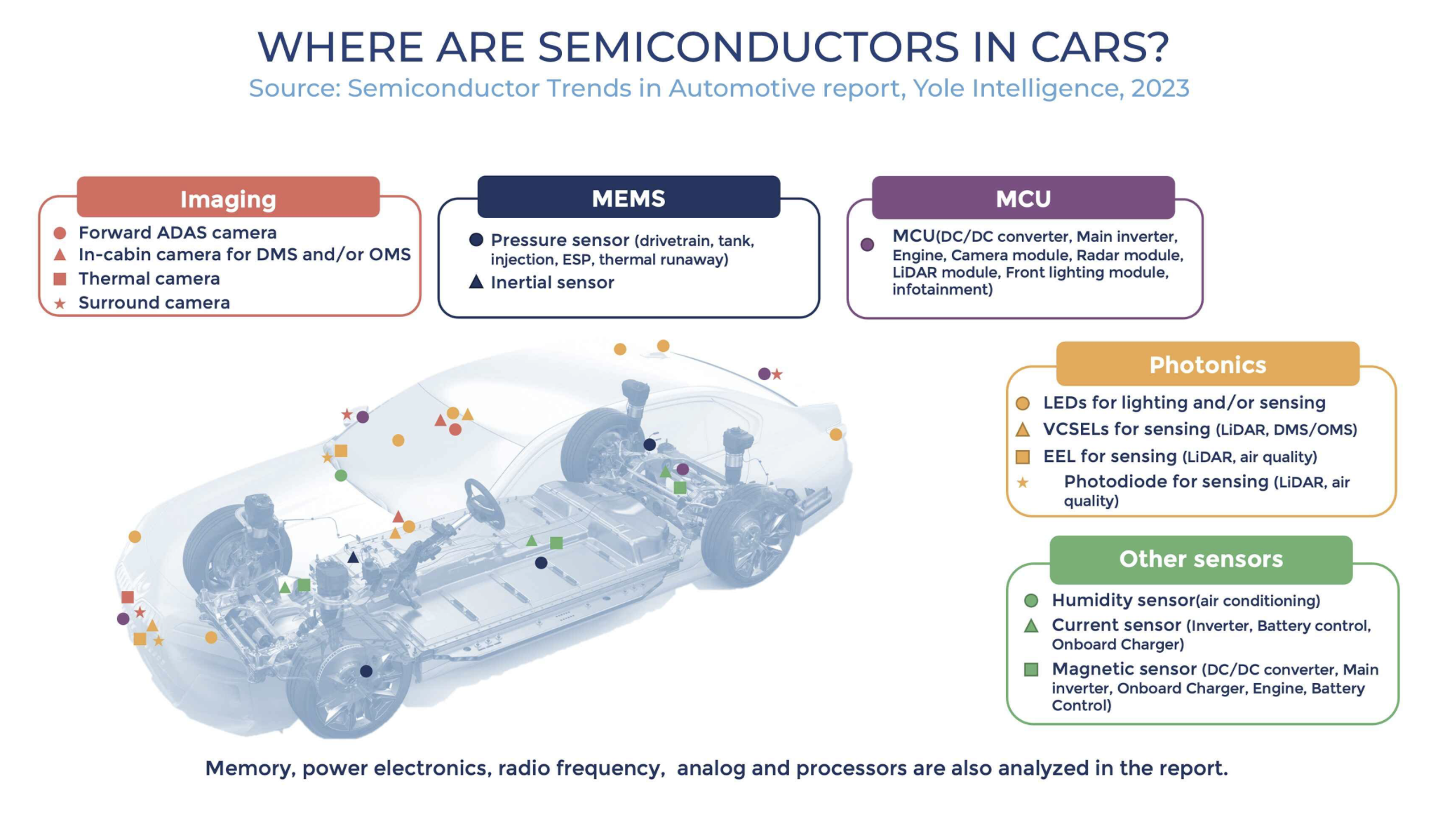
Modern vehicles now incorporate dozens of electronic control units and increasingly centralized computing architectures, making memory a foundational component for everything from digital instrument clusters to over-the-air software updates.
Automotive suppliers warn that a sustained DRAM price spike could raise bill-of-materials costs across multiple vehicle segments, particularly in electric vehicles and premium models that rely on larger infotainment displays and more powerful onboard processors.
The experience of the 2020–2022 semiconductor shortage looms large. During that period, automakers were forced to idle factories, remove features from vehicles, or redesign systems to accommodate alternative chips. Industry executives say a memory-specific crunch could trigger similar disruptions, albeit in a market now far more dependent on software and digital features.
Pricing outlook: why 70–100% is plausible
Analysts point to a combination of tight inventory levels, long lead times for new fab construction, and the rapid ramp-up of AI server deployments as the basis for the steep price forecasts.
High-bandwidth memory, used in AI accelerators, has already seen sharp increases in contract pricing through late 2025. As manufacturers reallocate wafer starts toward these premium products, standard DDR4 and DDR5 DRAM - commonly used in automotive and consumer electronics - could face reduced availability, driving up spot and long-term contract prices.
Some procurement firms report that automotive suppliers are already being asked to renegotiate multi-year supply agreements, a sign that memory producers expect sustained upward pressure rather than a short-term spike.
Strategic responses from manufacturers
Automakers and tier-one suppliers are exploring several mitigation strategies:
Long-term supply contracts with memory vendors to lock in volume, even at higher baseline prices
System redesigns to reduce overall memory requirements or consolidate computing modules
Dual-sourcing initiatives to avoid dependence on a single supplier or region
At the policy level, governments in the United States, Europe and parts of Asia are continuing to roll out semiconductor incentive programs aimed at expanding domestic manufacturing, but industry experts caution that new fabs take years, not months, to come online - making them unlikely to ease near-term pressure.
A broader signal for the tech economy
The looming DRAM shortage underscores a deeper structural shift: AI infrastructure is becoming a primary driver of global semiconductor demand, reshaping supply chains that once centered on consumer electronics and automotive production.
For memory manufacturers, the opportunity lies in premium, performance-driven markets. For automakers, the challenge is maintaining cost discipline and production stability in a world where their digital components now compete directly with the world’s largest technology companies for the same silicon.
As 2026 approaches, the question is no longer whether AI will influence the semiconductor market - but whether traditional industries can secure their place in a supply chain increasingly dominated by data-center economics.


