

The Donald Trump administration has escalated pressure on Cuba by moving to penalize third countries that help keep the island supplied with fuel, sharpening a long-running economic standoff into a wider trade dispute with potential regional spillovers.
At the center of the new push is an executive order that authorizes additional U.S. tariffs on imports from any country that “directly or indirectly” sells or provides oil to Cuba, according to reporting by the Associated Press and Reuters. The order does not appear to set a single tariff rate up front, instead directing the administration to identify suppliers and determine what measures to apply.
In remarks reported by ABC News, Trump framed the policy in existential terms, saying he believed Cuba “will not be able to survive” under tightening restrictions - language that echoes the White House’s argument that Cuba’s government poses a national security and foreign policy threat.
A bid to squeeze Havana - via its suppliers
The tariff threat is designed as a form of secondary pressure: rather than only restricting direct U.S. trade with Cuba, it raises the cost for outside governments and firms that supply the fuel Cuba needs to keep power plants running, transport moving, and basic services operating.
The timing is especially sensitive. Cuba is grappling with severe energy shortages and widespread blackouts that have compounded an already deep economic crisis, according to Reuters reporting from the island.
Washington’s move also lands amid shifts in Cuba’s traditional supply chain. For years, subsidised deliveries from Venezuela helped anchor the island’s energy system, but those flows have weakened, and other suppliers - particularly Mexico - have played a larger role, the AP and Reuters reported.
Mexico in the crosshairs
No country was singled out in the initial announcement, but Mexico’s position is central because it has become a key oil source for Cuba as Venezuelan shipments fell, according to Reuters and other reports.
Mexico’s president, Claudia Sheinbaum, warned the U.S. approach risks triggering a humanitarian emergency on the island and said Mexico would seek a diplomatic path that maintains solidarity with Cuba while avoiding economic retaliation.
That posture reflects a hard reality: Mexico’s economy is deeply integrated with the United States, making it unusually vulnerable to broad tariff action. Reuters reported that Sheinbaum has emphasized Mexico’s desire to avoid tariffs while keeping diplomatic channels open.
Cuba’s response: defiance and alarm
Havana has condemned the U.S. threat as economic coercion aimed at paralyzing essential services. Cuba’s president, Miguel Díaz-Canel, rejected Washington’s stated rationale and portrayed the move as an attempt to “strangle” the Cuban economy, according to Reuters and other coverage.
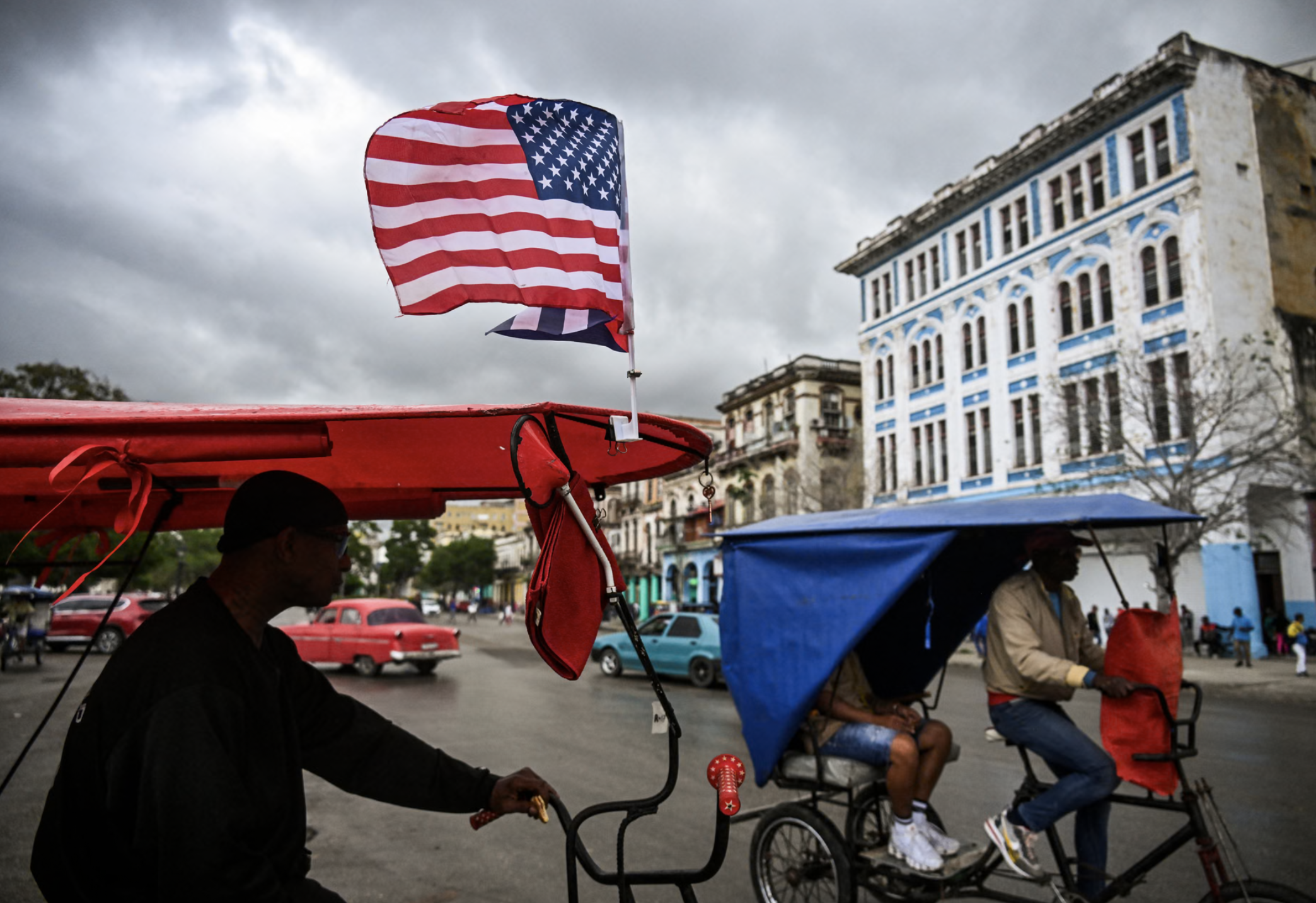
Inside Cuba, the practical impact of fuel scarcity is already visible: longer and more frequent outages, transportation disruptions, and rising costs for households. Reuters described daily life being reshaped by shortages and blackouts, with many residents focused on basic survival.
“Talks” alongside pressure
Even as the White House tightens the screws, Trump has suggested the administration is exploring a diplomatic opening. Both Reuters and the AP reported that Trump said the United States is “starting to talk” to Cuba and that he believes Havana may seek a deal as conditions deteriorate.
What remains unclear is whether those contacts are preliminary signals or the start of structured negotiations. The AP reported Trump did not offer details about timing or the substance of any engagement.
The legal and economic stakes
The measure adds a new layer to decades of U.S. restrictions on Cuba, including the broader embargo framework that has repeatedly drawn international criticism.
Economically, the tariff threat creates uncertainty well beyond Cuba: it could deter suppliers, complicate shipping and insurance decisions, and introduce new trade frictions with partners - especially if the administration applies sizeable duties on a country-by-country basis.
Politically, it also intensifies a familiar debate: whether constricting energy access accelerates political change, or whether it deepens hardship for ordinary citizens while the government adapts. That argument is now sharpened by the risk that third-country retaliation, countermeasures, or diplomatic fallout could widen the dispute beyond U.S.–Cuba relations.


