

The World Trade Organization has delivered a ruling that cuts to the heart of the global clean energy transition and the uneasy coexistence of climate policy and free trade. In a dispute brought by China, a WTO panel found that key elements of U.S. clean energy subsidies unlawfully discriminate against imports by favouring domestic production. In doing so, the panel reaffirmed the letter of international trade law while underscoring how poorly that framework now fits the geopolitical and industrial realities shaping decarbonisation.
The case centred on tax credits embedded in recent U.S. legislation, most prominently the Inflation Reduction Act. These incentives are explicitly structured to reward domestic manufacturing of electric vehicles, batteries, and renewable energy components, often by excluding or sharply limiting eligibility for products that rely on imported inputs. From Washington’s perspective, the goal is strategic as much as environmental. The United States wants to accelerate emissions reduction while reducing dependence on Chinese supply chains that dominate batteries, critical minerals, and solar hardware.
China argued that this approach violates the WTO’s foundational principle of national treatment, which requires imported goods to be treated no less favourably than domestically produced ones. The panel agreed. Under WTO rules, subsidies that are contingent on the use of local content are generally prohibited, regardless of whether they are motivated by climate goals, energy security, or industrial revitalisation.
From a strictly legal standpoint, the decision is orthodox. WTO jurisprudence has consistently taken a dim view of local content requirements, whether in renewable energy programs, automotive manufacturing, or infrastructure. Similar rulings have previously gone against Canada, India, and even China itself. The panel did not question the legitimacy of decarbonisation as a policy objective. It simply concluded that the means chosen by the United States conflict with obligations it has signed up to.
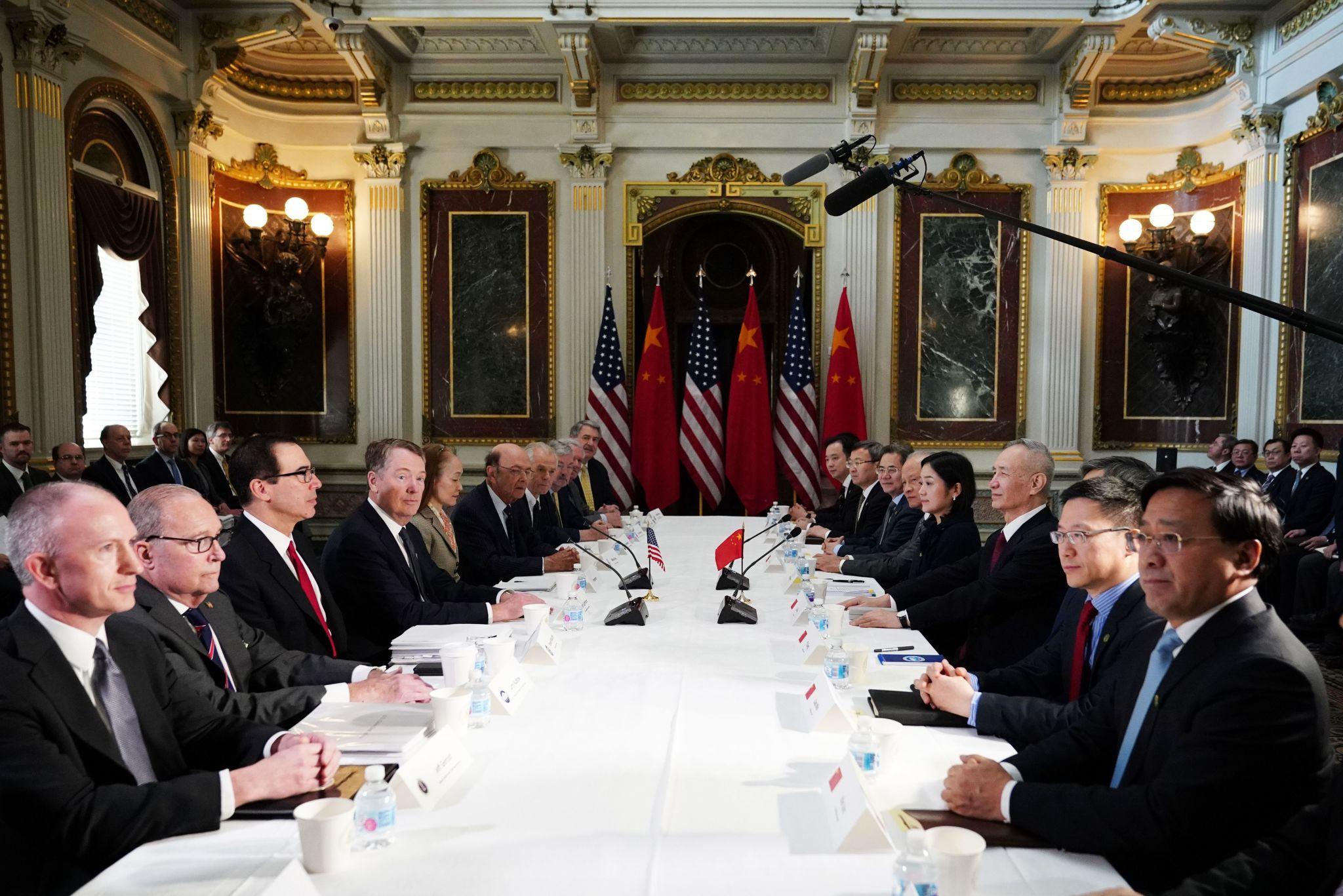
The political context, however, makes this ruling unusually fraught. The United States has effectively paralysed the WTO’s appellate body by blocking appointments of new judges, meaning the ruling may never be finally adopted or enforced. Washington can appeal the decision into a legal void, as it has done in other cases, avoiding formal compliance while rejecting the institution’s authority. That reality weakens the practical impact of the ruling while amplifying its symbolic weight.
For China, the outcome is a strategic win even if it yields little immediate relief. Beijing has long accused the United States and its allies of selectively embracing free trade while practicing industrial protectionism when it suits their interests. The ruling allows China to frame itself as a defender of multilateral rules, despite its own extensive use of subsidies and state direction. It also highlights the asymmetry in how global trade law constrains late industrialisers versus economies seeking to rebuild domestic manufacturing after decades of offshoring.
The deeper issue exposed by the case is structural. The WTO rulebook was largely written in the 1990s, an era that assumed globalisation would deepen, supply chains would lengthen, and industrial policy would recede. Climate change was peripheral. National security was narrowly defined. Today’s clean energy transition demands rapid, capital-intensive deployment of new industries at a scale that markets alone have struggled to deliver. Governments are responding with subsidies, mandates, and localisation strategies that sit uneasily with existing trade disciplines.
The automotive sector illustrates the tension vividly. Electric vehicles are not just consumer products but strategic assets tied to battery technology, grid stability, and critical mineral access. U.S. policymakers view domestic EV and battery production as essential to both emissions reduction and geopolitical resilience. WTO law, by contrast, treats a battery pack much like any other traded good, largely indifferent to where it is made or why that might matter.
The ruling also raises uncomfortable questions for allies pursuing similar strategies. The European Union has its own industrial policy ambitions under the Green Deal and Net-Zero Industry Act, while countries such as South Korea and Japan have negotiated bespoke arrangements with the United States to soften the impact of American localisation rules. If WTO rules were enforced strictly and evenly, many of these initiatives would face legal jeopardy.
What emerges is not a simple story of right and wrong, but of a system under strain. The WTO panel did what it was designed to do: apply agreed rules to a specific dispute. The problem is that those rules increasingly clash with the political imperatives driving climate and industrial policy in major economies. When compliance becomes optional and enforcement mechanisms are hollowed out, legal victories risk becoming rhetorical gestures rather than instruments of governance.
For the clean energy transition, the implications are mixed. On one hand, aggressive subsidies have already unlocked investment and accelerated deployment in the United States. On the other, fragmented trade regimes and retaliatory measures risk inefficiency, duplication, and higher costs. The ruling serves as a reminder that decarbonisation pursued through economic nationalism carries trade-offs, both literal and institutional.
In the longer term, the case adds urgency to a question the global system has yet to answer: can trade rules be adapted to accommodate climate-driven industrial policy without collapsing into subsidy wars? Absent reform, countries will continue to bend or ignore the rules, and institutions like the WTO will struggle to remain relevant.
The panel’s decision in favour of China does not stop U.S. clean energy subsidies. It does, however, lay bare the growing gap between the legal architecture of global trade and the realities of a decarbonising, geopolitically fractured world. That gap is widening, and rulings like this one make it harder to pretend otherwise.


