

The European Union is drawing a tighter line around its electric-car support than around its trade relationships. On 23 November 2026 Nikkei Asia reported that an amended version of the Industrial Accelerator Act (IAA), the law behind the bloc's "Made in Europe" rules, would still exclude Japan-built EVs from preferential treatment. South Korea's Seoul Economic Daily, citing the Nikkei report, said eligibility would cover the 27 member states, the European Economic Area, Switzerland and the UK. Seoul Economic Daily said Japan and South Korea were not accepted, and Anadolu's reporting supports Türkiye's exclusion.
The same week, the European Commission confirmed import quotas on hybrid cars from 1 December, which hit Japan and Türkiye as well as China. Separately, EU governments are reportedly moving away from binding electric-car targets for company fleets. Taken together, the signals suggest Brussels is easing how fast companies must electrify while becoming stricter about whose electric cars public money may buy.
Other big markets have done this differently. The US tied its $7,500 tax credit to North American assembly and battery content, then abolished the credit on 30 September 2025. China's purchase-tax break goes to cars built in China, including those from foreign brands. The EU's draft test is unusual because it does not follow trade agreements. Japan has an economic partnership agreement with the EU and Türkiye is in a customs union with it, yet both are reported to be out. The UK is in, on conditions.
What changed between 23 and 24 November
Four developments landed within 48 hours:
- Japan stays excluded. Nikkei reported that the amended IAA under consideration keeps Japan-made EVs out of preferential treatment. It added that Japanese government and business groups want the policy reviewed by the end of 2026. The revised text has not been published, so this rests on Nikkei's reporting.
- Ford objects over Türkiye. Jim Baumbick, Ford's president in Europe, told Handelsblatt that the rules would make Transit vans assembled in Türkiye ineligible for purchase incentives and public contracts, according to Anadolu Agency.
- Hybrid quotas confirmed. The Commission published provisional safeguard quotas on hybrid imports from China, Japan, Türkiye, the UK and others. They apply for 200 days from 1 December 2026.
- Fleet targets soften. According to Automobilwoche, reported by electrive, a Council compromise draft rejects binding national quotas for electric company cars.
How 'Made in Europe' would work
The Commission proposed the IAA on 4 March 2026. For cars, it would attach origin conditions to public money. These cover consumer purchase incentives, public procurement and support for company vehicles. A qualifying car would have to be assembled in Europe, with at least 70 per cent of the value of its components, excluding the battery, made in Europe. Separate rules would phase in European content for the battery itself.
France and Germany then reshaped the debate. On 15 October 2026 they agreed a joint position that, according to EUobserver, would move the car rules into a separate automotive package. From 2028 a qualifying car would have to be assembled in Europe and meet the 70 per cent component test. Germany accepted French demands for stricter rules that apply to fewer countries.
The German carmakers' association VDA described the geographic scope of that deal as the EU27 plus, "under certain conditions", the UK. Reuters, reported by The Straits Times, said the Franco-German paper made UK status for cars subject to "dynamic alignment with EU conditions for investment from third countries and with EU trade protection measures". In practice, that could mean Britain copying EU duties on Chinese EVs.
Who is in and who is out
The table below sets the reported eligibility for "Made in Europe" support against the new hybrid quotas and the EU's existing duties on Chinese battery-electric cars (BEVs). Quota totals are the sum of the three sub-period quotas in the Commission regulation.
Where the car is built | 'Made in Europe' support (reported draft) | Hybrid quota, 1 Dec 2026 to 18 Jun 2027 (units) | EU countervailing duty on BEVs |
|---|---|---|---|
EU member states | In | n/a | None |
Norway, Iceland, Liechtenstein | In | No country quota | None |
Switzerland | In | No country quota | None |
UK | In, with conditions | 105,402 | None |
Türkiye | Out | 126,320 | None |
Japan | Out | 170,889 | None |
South Korea | Out | 67,924 | None |
China | Out | 191,780 | 7.8% to 35.3% |
Mexico | Out | 34,755 | None |
US | Out | 18,482 | None |
Sources: Official Journal of the EU via electrive, Nikkei via Seoul Economic Daily, VDA, European Commission (Access2Markets).
The table shows a split among the EU's partners. Japan, Türkiye and South Korea face hybrid ceilings and are also reported to be outside EV incentives. The UK faces a ceiling but is expected to be inside the incentive scheme. China is the only country facing all three measures: hybrid quotas, exclusion from incentives and countervailing duties, which are tariffs meant to offset subsidies.
One possible softening was reported. Citing Nikkei, Seoul Economic Daily said the revised proposal may let EVs assembled in the EU qualify even if they use Korean or Japanese parts.
Türkiye and Japan make their case
Ford's objection shows how assembly location can override everything else. Baumbick told Handelsblatt that half the parts in the Türkiye-built Transit come from Europe. He said the van was developed and tested in Germany, the UK and Belgium under EU rules then in force. Moving production to Cologne would not help, he argued, because the Turkish investment is only three years old and has not yet paid back.
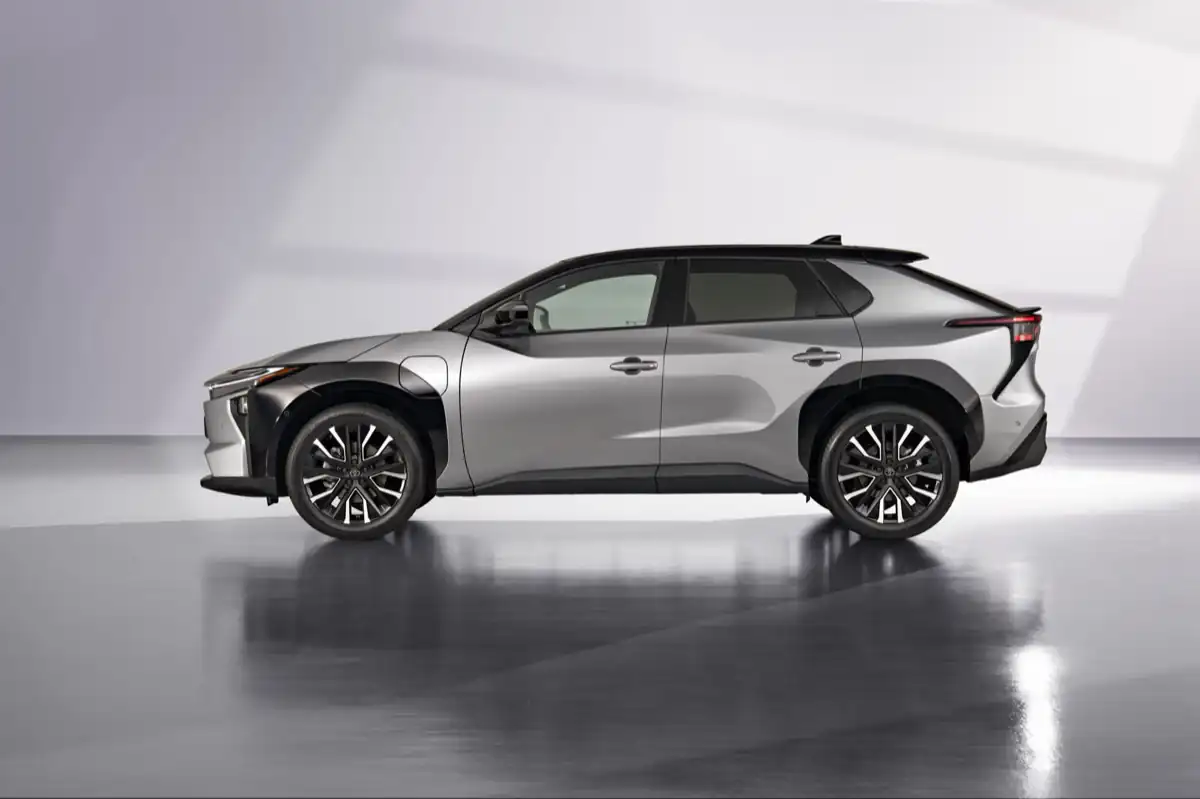
The Toyota bZ4X, a Japan-built electric SUV sold in Europe (Toyota press photo). Photo: Toyota press image.
Trade with Türkiye runs both ways. The European Automobile Manufacturers' Association (ACEA) says the EU exported 713,476 cars worth €15.6bn to Türkiye in 2025. EU-made cars took 49 per cent of Turkish car sales that year.
Japan has lobbied at the top. Prime Minister Sanae Takaichi pressed German Chancellor Friedrich Merz on the issue in Tokyo on 28 October 2026, according to 36Kr. Toyota plans EV production at its Czech plant from 2028 and until then relies mainly on exports from Japan. After his Asian tour, Merz acknowledged the unease. Bloomberg, carried by The Star, quoted him: "There is quite clearly a concern that what we mean by 'Buy European' will lead us into a new phase of protectionism."

The Berlaymont building in Brussels, headquarters of the European Commission, photographed in October 2022. Photo: Euro Pictures / Wikimedia Commons, CC BY 2.0.
How the EU compares with the US and China
Each major market has supported EV buyers while favouring local production, but by different routes. The table compares the main schemes.
Scheme | Origin test | Content or technical rule | Value to buyer | Status |
|---|---|---|---|---|
EU IAA (proposed) | Assembly in EU; UK and others under negotiation | 70% of non-battery component value from Europe | Set nationally | Proposal; talks between EU institutions not yet begun |
US clean vehicle credit | Final assembly in North America | 2025: 60% critical minerals, 60% battery components; no "foreign entity of concern" content | Up to $7,500 | Ended 30 Sep 2025 |
China NEV purchase tax | Cars built in China, foreign brands included | Efficiency limits; plug-in hybrids need 100 km electric range | Tax halved to 5%, capped at ¥15,000 | Runs 2026 to 2027 |
UK Electric Car Grant | No formal origin test | Manufacturing sustainability standards | Up to £3,750 on cars up to £37,000 | £650m scheme since July 2025 |
Sources: Congressional Research Service, IRS, China Daily, CarNewsChina, GOV.UK, EUobserver, Politico.
The US model was the closest to the EU's. However, it extended its critical-minerals test to minerals from free trade partners, according to the Congressional Research Service. The EU draft, as reported, does not reward trade-agreement status. Origin rules followed the credit out of existence when Congress brought the end date forward from 2032 to 30 September 2025.
China's approach depends on where cars are built, not on fine-grained content rules. CarNewsChina says the tax break applies to EVs manufactured in China, including those from Tesla, Volkswagen and Toyota. For 2026 and 2027, a 50 per cent reduction replaced the full exemption. The capped benefit fell from ¥30,000 to ¥15,000.
Britain has used a less direct filter. The Electric Car Grant scores manufacturers on production sustainability. In July 2025 Autocar reported that cars built in Asia, including China, were expected to be excluded, partly because battery production on carbon-heavy power grids is penalised.
The trade wall around the subsidy rules
"Made in Europe" sits alongside trade defences already in force. Since 30 October 2024 Chinese-built BEVs have carried countervailing duties for five years. These are set by manufacturer: 17.0 per cent for BYD, 18.8 per cent for Geely, 35.3 per cent for SAIC and 7.8 per cent for Tesla's Shanghai plant.
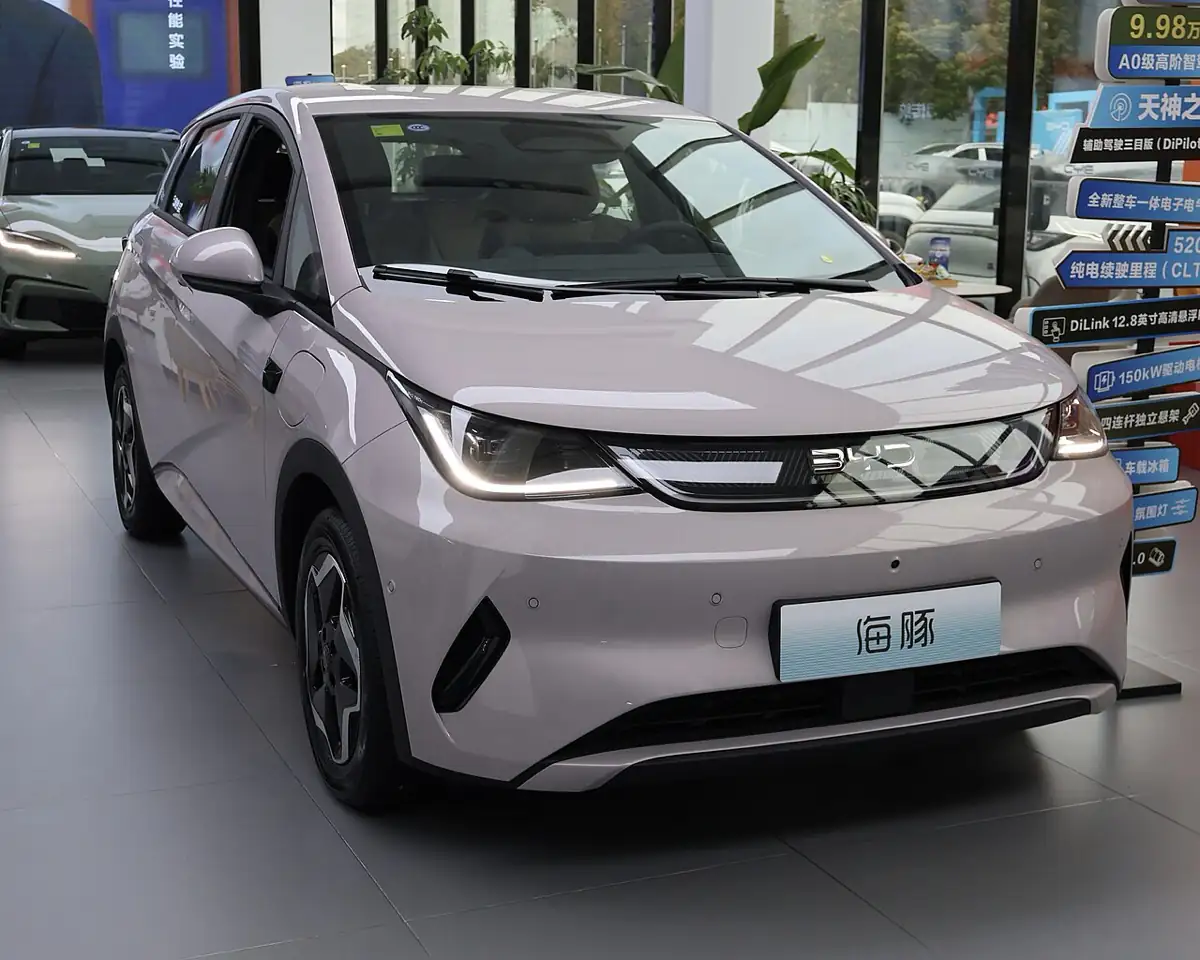
A BYD Dolphin, a Chinese-built electric car, on display in Shanghai in December 2025. Photo: S5A-0043 / Wikimedia Commons, CC BY 4.0.
The figures published with the hybrid regulation show how trade shifted around those duties. According to The Guardian's reading of the Official Journal, imports of Chinese EVs rose from 21,000 in 2020 to 438,000 in 2024, then flattened as Chinese exports moved to hybrids. China's worldwide hybrid exports rose from 191,000 in 2023 to 1.124m in 2025. Eurostat data cited by China's commerce ministry show EU imports of Chinese hybrids rising from 107,000 in 2024 to 302,000 in 2025.
The EU justified the quotas by "the existence of sufficient evidence showing that imports of hybrids threaten to cause serious injury to the union industry". Because safeguards under World Trade Organization rules must apply to all sources, Japan, Türkiye and the UK are caught too. Country quotas are set at 2025 import levels plus a little over 15 per cent. Range-extender EVs are excluded and remain subject to the BEV duties, according to electrive.
At the same time, the EU is opening export markets. EU governments authorised signature of the EU-Indonesia trade deal on 18 November 2026. Indonesia's 50 per cent duty on EU cars will be removed within five years. The pattern is consistent: freer access abroad for EU-built cars, and tighter conditions at home on non-EU-built ones.
Fleet quotas: the demand side softens
Company cars are where the two policies meet. On 16 December 2025 the Commission proposed a regulation requiring member states to ensure that, from 2030, a set share of new car and van registrations by large companies are zero- or low-emission. Targets would vary by country. According to the European Parliament's legislative tracker, the same proposal would let member states support corporate car purchases only if the vehicles are "made in the EU".
That push on demand is weakening. Parliament's three centre groups have turned the quotas into voluntary targets. Jens Gieseke, the centre-right chair of the transport committee, said: "For corporate fleets, we have found a good compromise with the other groups that protects fleet operators from major burdens." The Council draft prepared for 23 November reportedly goes further and would still allow tax breaks for petrol and diesel company cars.
It is not yet clear whether the "made in the EU" condition on fleet support will survive in the Council text. If binding quotas fall away while origin rules stay, public support would shape which cars fleets buy more than how many electric cars they buy.
What it means for the UK
Britain looks set to be inside the incentive scheme, but at a price. At the UK-EU summit on 20 November 2026, both sides gave themselves six months to settle UK treatment under "Made in Europe", alongside EU students' university fees.
The hybrid quota is not tight for now. The Guardian put the UK's first-year allocation at 190,000, against 166,000 hybrids exported to the EU in 2025. A larger risk arrives on 1 January 2027, when tougher rules of origin under the post-Brexit trade agreement take effect. SMMT and ACEA say fewer than one in four electrified cars and vans traded across the Channel will comply. The resulting 10 per cent tariff could cost almost €400m on UK exports and €1.4bn on EU exports in 2027.
What to watch
- 1 December 2026: hybrid quotas take effect.
- December 2026: the European Parliament is expected to vote on softer CO2 rules for new cars, and Japan wants the IAA reviewed by the end of the year.
- 1 January 2027: stricter UK-EU rules of origin for EVs apply.
- Spring 2027 at the earliest: the date Joël Reland of UK in a Changing Europe gives for final IAA legislation. Politico reported that negotiations between the Council and Parliament had yet to begin.
- Within six months of 20 November 2026: the UK-EU deadline on "Made in Europe" and tuition fees, a period that includes the French presidential election.
- 18 June 2027: provisional hybrid quotas expire. Permanent measures can follow within nine months of the investigation's launch on 30 October 2026, extendable by two months.
Featured image: Belgique - Bruxelles - Schuman - Berlaymont - 01 by EmDee, via Wikimedia Commons, CC BY-SA 4.0.


