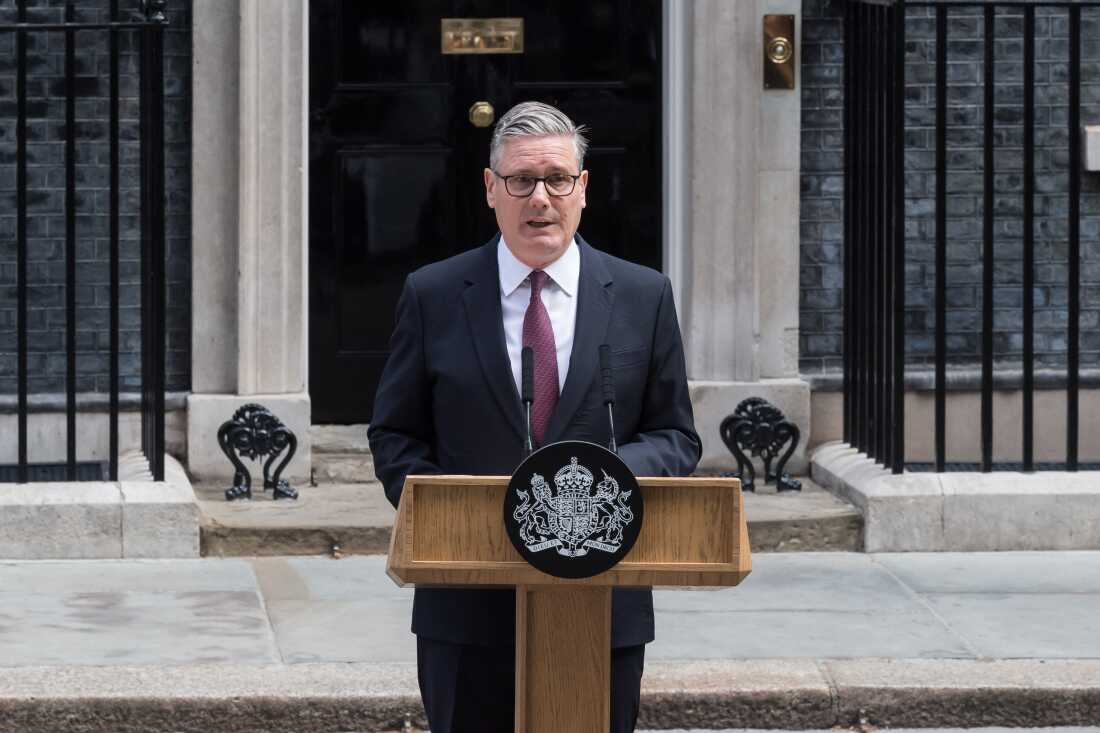
British Prime Minister Keir Starmer announced his resignation on Monday, bowing to a revolt inside his governing Labour Party and setting the United Kingdom on course for its seventh prime minister in a decade. Starmer, who informed King Charles III of his decision, will stay on as caretaker leader until the party chooses a successor, according to NBC News and NPR.
The exit caps months of mounting pressure and marks one of the more abrupt reversals in recent British politics: less than two years after Labour swept to a commanding general-election victory, the party has forced out the leader who delivered it. For a country that has churned through prime ministers since the 2016 Brexit referendum, the resignation deepens a decade of political instability at the heart of a major Western democracy and a nuclear-armed G7 power.
What happened
Starmer's position had been eroding for months. By mid-May, more than 95 Labour MPs had publicly called on him to resign or set out a timetable for his departure, NBC News and Wikipedia's account of the crisis report. The immediate driver was electoral fear: Labour lost more than 1,000 seats in May's local council elections, a result widely read within the party as a warning of defeat at the next general election amid the rapid rise of the hard-right Reform UK.
The revolt then spread to his own government. A wave of ministers quit in protest, including Health Secretary Wes Streeting and junior minister Jess Phillips. The final blow, according to NBC News, came last week when Defence Secretary John Healey, a Starmer loyalist, resigned over the prime minister's military spending plans, part of a cluster of departures at the Ministry of Defence. With his cabinet fracturing and his backbenches in open rebellion, Starmer's authority became untenable.
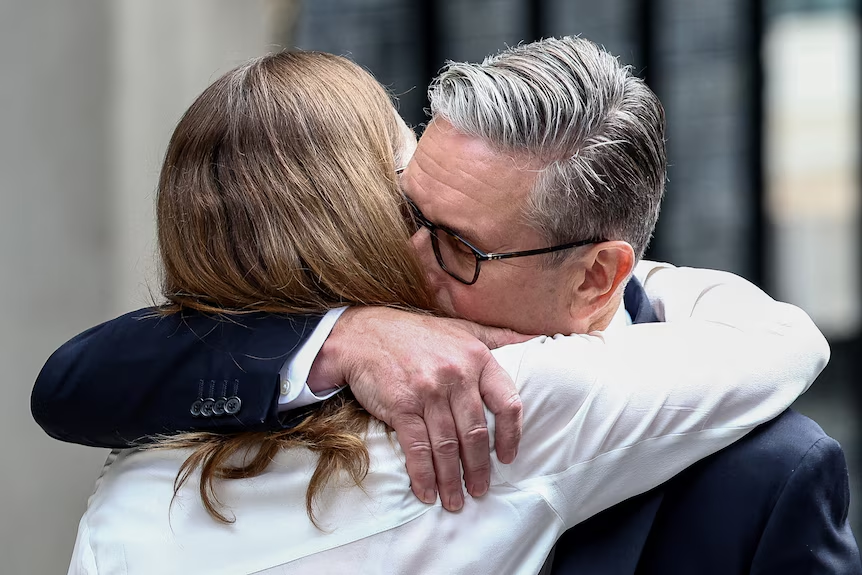
In his statement, Starmer said he would stand aside, and ABC News reported he sought to go with "good grace." Crucially, he does not leave office immediately: under Britain's system, he remains prime minister in a caretaker capacity until Labour, as the governing party, selects a new leader who can command the confidence of the House of Commons.
Who replaces him
The clear front-runner is Andy Burnham, the popular former mayor of Greater Manchester, who returned to Parliament only last week, winning a by-election on 18 June with 54.8 percent of the vote, according to Wikipedia's record of the crisis. Burnham confirmed on Monday, shortly after Starmer spoke, that he would seek the leadership.
His path runs through a defined timetable. Starmer said nominations to replace him as Labour leader will open on 9 July and close as Parliament rises for its summer recess on 16 July. If more than one candidate stands, a contest among party members would follow, with a new leader, and therefore a new prime minister, chosen by 1 September. A coronation, if rivals stand aside for Burnham, could deliver a successor sooner.
Why it matters beyond Britain
The instability is striking by any measure. A run of seven prime ministers in ten years is extraordinary for a country that long prided itself on stable, single-party government, and it signals how thoroughly the post-Brexit era has scrambled British politics. The proximate cause this time, the surge of Reform UK, mirrors the rise of hard-right and populist movements across Europe, from France to Germany, and Labour's panic reflects a wider crisis of confidence among the continent's traditional centre-left.
The change at the top also carries policy weight abroad. The dispute that broke Starmer was over defence spending, an acutely sensitive question for a NATO member at a moment of heightened security tension in Europe and the Middle East. How a Burnham-led government approaches military budgets, support for Ukraine, and Britain's posture toward Washington will be watched closely in allied capitals. Markets and foreign partners generally prefer continuity; a leadership transition injects fresh uncertainty into Britain's economic and foreign policy just as both face strain.
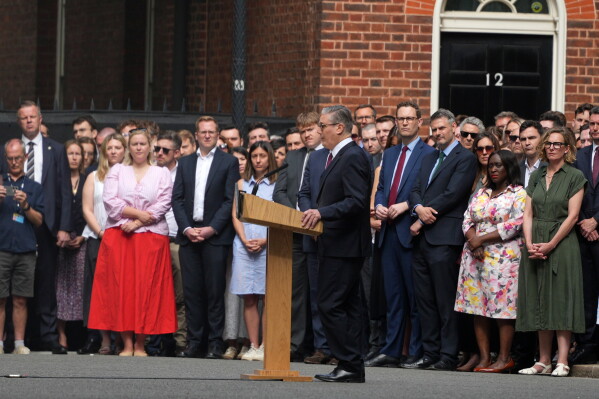
For now, though, the practical disruption is limited by design. Britain has no immediate general election, Labour retains its Commons majority and is simply changing leaders, so the government continues to function under a caretaker prime minister while the party settles its succession.
What's next
The next six weeks will decide the shape of Britain's government. Watch whether any candidate challenges Burnham once nominations open on 9 July, which would force a members' ballot and a longer contest into September; whether Burnham can reunite a fractured party and reassure jittery MPs; and what an incoming prime minister signals on the defence-spending question that toppled his predecessor. Starmer's resignation answers one question, who will not lead Labour into the next election, while leaving the larger ones, about the party's direction and Britain's stability, firmly open. (Forward-looking; succession details may shift as nominations proceed.)