
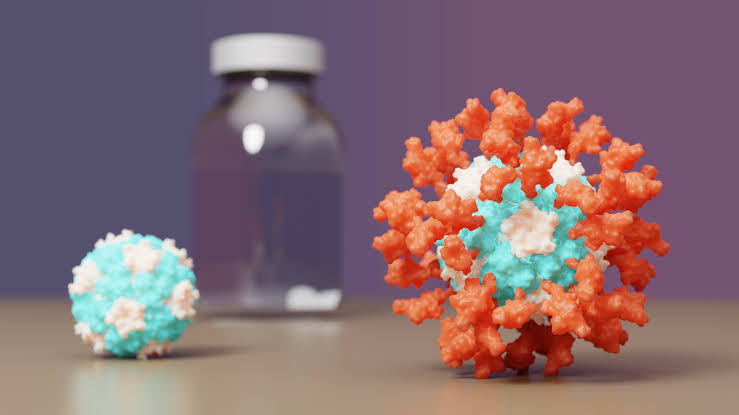
Researchers at the University of Cambridge, working with the vaccine developer DIOSynVax, have reported the first human trial of a vaccine whose active ingredient was not copied from a real virus but designed from scratch by computer. According to reporting collated by ScienceDaily, the early-stage trial found the vaccine safe and able to trigger immune responses against SARS-CoV-2, the virus behind COVID-19, as well as the earlier SARS-CoV-1 and related coronaviruses found in bats.
That last detail is the headline. The goal of the design was not to chase the last pandemic but to pre-empt the next one: a vaccine that recognises a whole family of coronaviruses, including strains that have not yet jumped to humans. If the approach holds up, it points toward a different model of pandemic preparedness, building defences before an outbreak rather than scrambling after it.
What's genuinely new here
The novelty is in how the vaccine's target was created. Conventional vaccines are built around a piece of an existing pathogen, a spike protein, say, taken from a virus circulating in the world. This vaccine's active component was instead generated by computer simulation, engineered to present the immune system with features common across many coronaviruses rather than the signature of any single one. In effect, the design tries to teach the body to spot the shared family resemblance, not just one face.
That is a meaningfully different strategy from the broadly protective coronavirus vaccines others have pursued, and the trial is the first real-world test of whether a fully computer-designed immunogen can do the job in people, not just in models.
What a Phase I result does and doesn't prove
This is where caution is essential. The trial is Phase I, the earliest stage of human testing. Its purpose is to establish that a vaccine is safe and that it provokes an immune response — and on those two measures, the results are encouraging. What a Phase I trial is not designed to show is whether the vaccine actually prevents infection or illness in the real world. That requires far larger Phase II and Phase III trials, and many candidates that clear this first hurdle never make it through the next ones.

Two further caveats matter. First, "triggers an immune response" is not the same as "protects." Detectable antibodies and immune activity are a promising signal, but only later efficacy trials can tell whether that translates into fewer infections. Second, the publicly reported details so far are limited. The trial's size and the full data behind these claims will need to appear in a peer-reviewed publication and be scrutinised by independent immunologists before the result can be judged on its merits. Until then, the right frame is cautious optimism, not a solved problem.
Why it still matters
Set against those limits, why is this worth attention? Because it tests two ideas at once that could each reshape vaccine development. One is computational design: if an immune target generated in silico performs in humans, it shortens and broadens how future vaccines might be made. The other is breadth: a single shot that covers a viral family, rather than one variant, is exactly the tool public-health planners have wanted since COVID-19 exposed how slow variant-by-variant updates can be.
It also fits a wider shift. Computational methods, including AI-assisted approaches, are increasingly being used to model biology that was previously too complex to predict, from protein structures to climate systems. A computer-designed vaccine clearing a human safety trial is one of the more concrete signs that those tools are starting to produce results that reach the clinic.
What to watch next
The meaningful tests are still ahead. Watch for the peer-reviewed publication with full trial data and participant numbers; for the design of the larger trials needed to measure actual protection; and for how the vaccine fares against coronaviruses beyond the handful tested so far, the real promise rests on genuinely broad coverage. For now, the takeaway is measured: a real scientific milestone in how vaccines can be designed, at an early enough stage that the most important questions remain open. There is no vaccine to line up for yet, but there is a result worth taking seriously.