

Mercedes-Benz will give selected customers in California, Stuttgart and Munich early access to two new driver-assistance systems from December, ahead of a wider rollout in the US and Germany during 2027. MB.Drive Assist Pro steers, brakes and accelerates along a full navigation route, including city streets. Hands-Free Highway Assist lets drivers take their hands off the wheel on eligible fast roads.
The launch puts a traditional luxury maker into direct competition with Tesla's Full Self-Driving (Supervised), which also works in town. Both Mercedes systems are SAE Level 2. That means the driver must supervise at all times and remains responsible. Journalists who drove the systems in San Francisco found the city function capable in dense traffic but at times hesitant.
How the two systems work
The SAE automation scale runs from Level 0, no automation, to Level 5, a car that can drive itself anywhere. At Level 2, the car controls steering and speed, but a human must watch the road and take over when needed. Mercedes markets the new package as "Level 2++". That is a marketing label, not an SAE category. Road & Track noted that the extra pluses blur the fact that it remains a Level 2 system.
Hands-Free Highway Assist works on approved controlled-access roads. In the US it operates at up to 85mph (137km/h). In Germany, Mercedes quotes a limit of 130km/h (81mph). The system can change lanes by itself, either to overtake or to get into position for an exit on the navigation route. Hands and feet can come off the controls, but eyes must stay on the road. The car issues warnings if the driver looks away for too long.
MB.Drive Assist Pro covers the whole route, from leaving the motorway to turning at junctions and stopping and starting at traffic lights. The driver activates it with a steering-wheel button once route guidance is running. Car and Driver and Road & Track both describe the city function as hands-on, with a hand kept on the wheel.
Mercedes says the hardware comprises 27 sensors: 10 cameras, five radar units and 12 ultrasonic sensors. A central computer rated at up to 254 trillion operations per second processes the data. The software was developed with Nvidia and runs on Mercedes' own MB.OS operating system. It pairs Nvidia's Alpamayo AI model, which learns driving behaviour from data, with a conventional "classical stack" of hard-coded rules, according to Road & Track.
What the first test drives found
The reviews were broadly positive but recorded several interventions. Car and Driver drove a GLC 400 Electric through north San Francisco. After a green light, the car crept forward and braked repeatedly because pedestrians stood near the crossing. The tester had to press the accelerator to clear the junction. Later, after passing a parked lorry by using the opposing lane, the car stopped for a stop sign before fully returning to its own lane. Its verdict on the city system: "Ideal? No. Acceptable? Yes."
Road & Track saw the car flick between left and right indicators in a turn lane before settling on the correct choice. A Mercedes engineer suggested the AI model and the rule-based stack may have disagreed about the best lane. The reviewer also found the car slow to move off at stop signs. Yet it once entered a junction closer to a crossing pedestrian than the tester would have chosen.
SlashGear's tester took over when the car crossed into oncoming lanes and when it began a right turn while a pedestrian was crossing. The Drive was more enthusiastic. It praised the system's "confidence and fluidity in its decisions" on the city's steep streets. Its reviewer reported touching the wheel only when an attention timer demanded it and once when another driver cut in.
The motorway system drew mixed notes. The Drive found lane changes slow in rush-hour traffic. Road & Track said the system forced its reviewer to look back at the road only once in about 30 miles of highway testing, after they spent too long adjusting a passenger-side mirror.
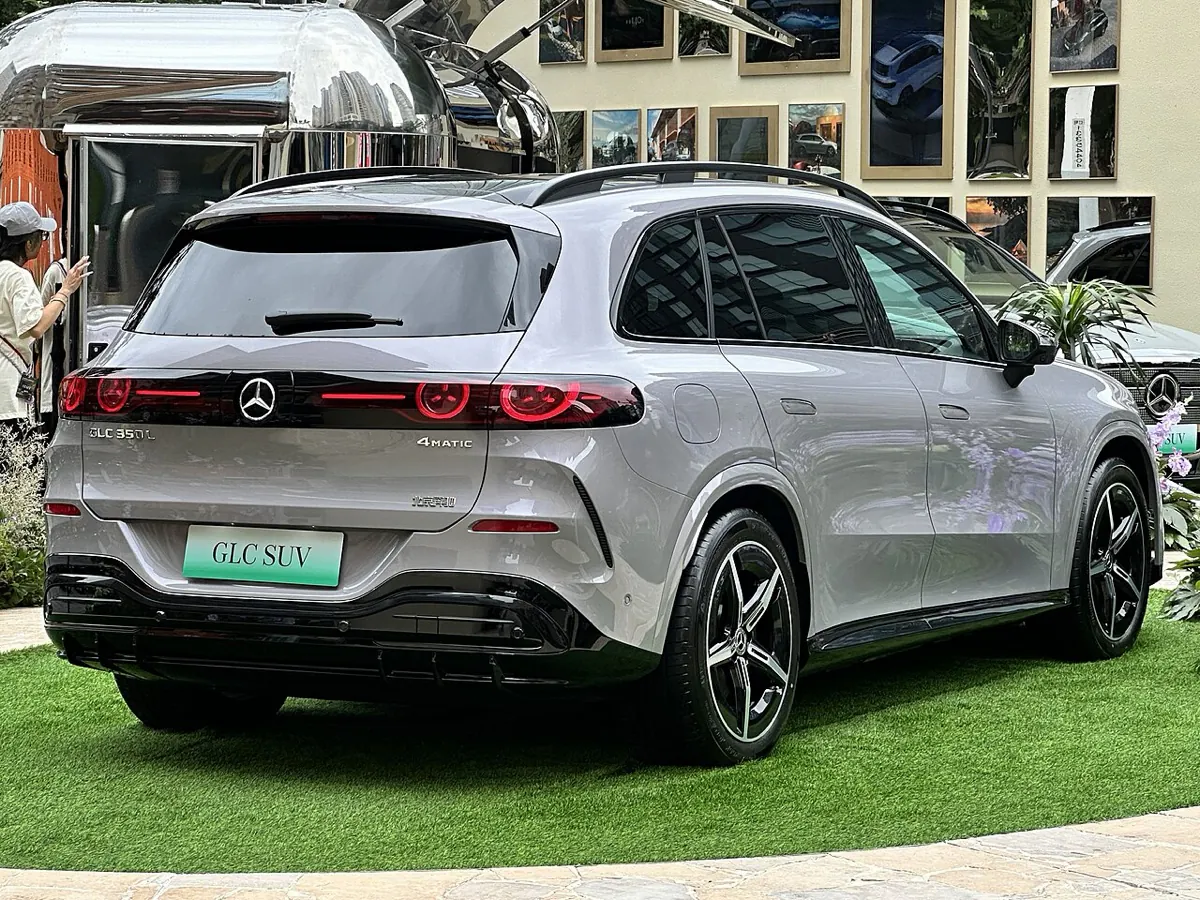
A Mercedes-Benz GLC 350L Electric seen from the rear, in a file photo from August 2026. Photo: JustAnotherCarDesigner / Wikimedia Commons, CC0.
A step back from Level 3
The new systems replace a more ambitious bet. Mercedes' Drive Pilot was the first Level 3 system offered in the US. At Level 3, the driver may take their eyes off the road in limited conditions. Drive Pilot allowed this on motorways at up to 95km/h, according to electrive. Handelsblatt reported in January that it would not be offered on the updated S-Class. Road & Track reported that chief technology officer Jörg Burzer described the system as "early".
Under Level 2, legal responsibility stays with the driver. Electrive reported that, under Level 2, the manufacturer does not take responsibility, and that Level 2 systems can be offered at a lower price because they do not need lidar. The trade-off is clear. Mercedes is swapping eyes-off driving in narrow conditions for hands-on help across far more of a typical journey.
In Europe, Mercedes says the system complies with UN Regulation 171, the international rule for driver control assistance systems. The company says this could let it reach other EU markets without separate national approvals. Ola Källenius, chairman of the board of management, said: "MB.Drive Assist Pro gives our customers a new level of safety, intelligence and confidence behind the wheel."
Cost and eligible models
MB.Drive Assist Pro will be sold by subscription. Road & Track reported a three-year plan from the factory, plus one-year and one-month options through the car's digital store. Prices have not been announced. A Mercedes representative told Road & Track they would be "competitive" with similar offerings from other automakers. Early-access customers in California will get both systems free for a limited period. In Germany, a free one-month trial is planned after launch.
The car must have the required hardware fitted at the factory; eligible cars can then be updated over the air. According to Car and Driver, 2027 US models supporting both systems are the CLA (petrol and electric), GLC Electric, GLE, GLS and S-Class, plus 2026 CLA Electric cars with the MB.Drive Assist package. The 2027 GLB, C-Class, petrol GLC and AMG GT 4-Door will get the hands-free motorway function only.
Rollout timeline
- December 2026: early access for selected customers in California (both systems) and in Stuttgart and Munich (MB.Drive Assist Pro).
- End of 2026: hands-free motorway driving at up to 130km/h arrives in Germany, according to Mercedes.
- Spring 2027: Hands-Free Highway Assist expands across the US, Car and Driver and Road & Track reported.
- First half of 2027: MB.Drive Assist Pro becomes orderable in Germany. US availability is due during 2027.
A version of the system is already on sale in China, developed with local partner Momenta. Mercedes has not given timing for the UK. Further ahead, Mercedes and Nvidia have said they aim to offer a Level 4 system, needing no human supervision in defined conditions, in the next-generation S-Class.
Featured image: Mercedes-Benz GLC 350L Electric 001 by JustAnotherCarDesigner, via Wikimedia Commons, CC0.


