

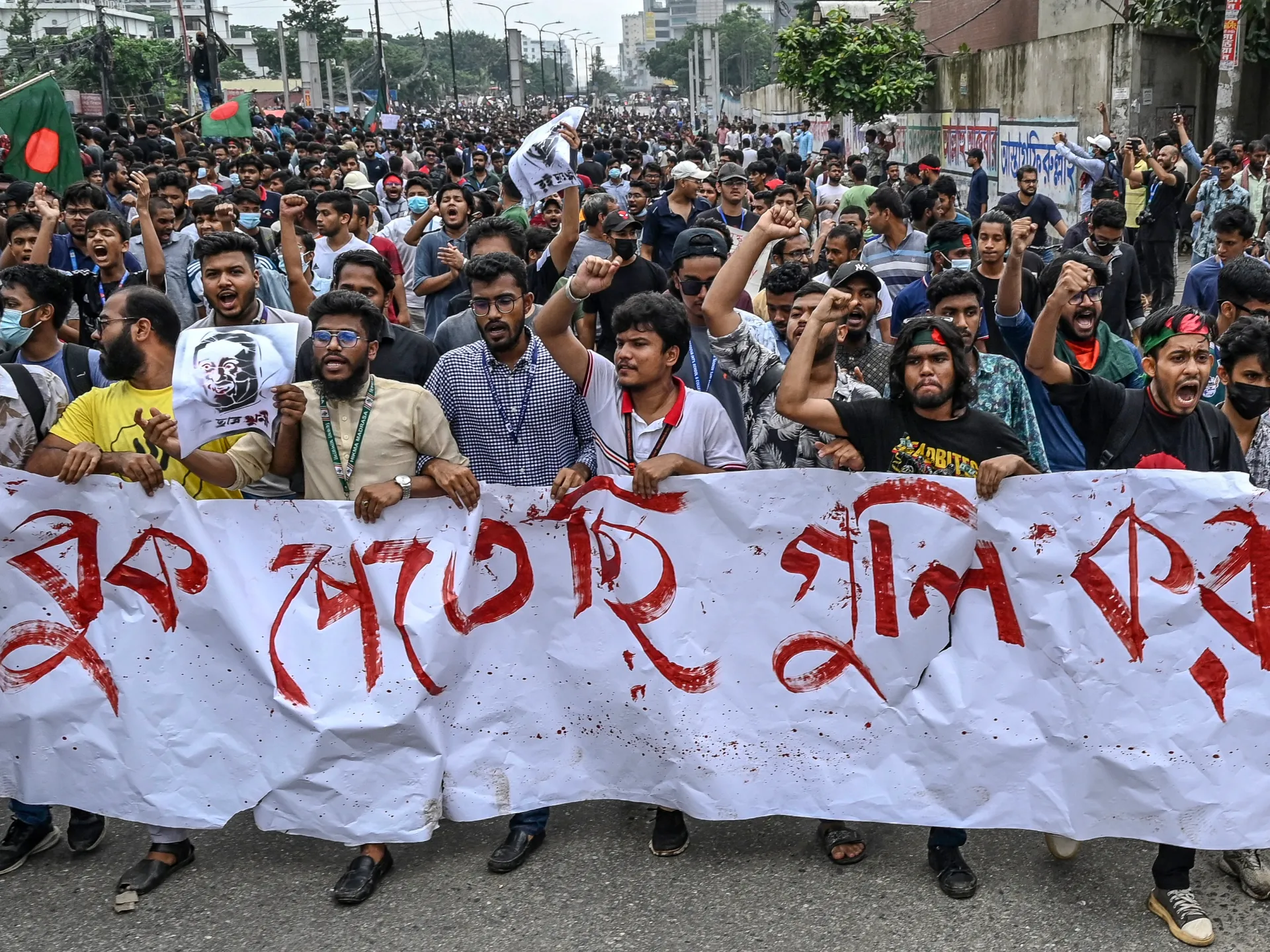
In the summer of 2024, Bangladesh’s students and young professionals proved they could shake the foundations of the state. What began as a dispute over public-sector hiring quotas quickly became the country’s largest youth-led revolt in years - one that ultimately helped force long-time leader Sheikh Hasina from office, ushering in an interim administration led by Nobel laureate Muhammad Yunus, and set the stage for a national election on February 12, 2026.
Eighteen months on, however, many of the same young Bangladeshis who filled the streets now describe a harsher reality: the politics moved faster than the economy, and a movement that could topple a government has struggled to deliver what youth wanted most - stable jobs, upward mobility, and a sense that merit matters.
From quota anger to a nationwide rupture
The spark was technical but emotionally charged: a court-linked decision that revived a system reserving 30% of government jobs for descendants of veterans of Bangladesh’s 1971 independence war - a quota many students argued distorted merit-based hiring and favored ruling-party networks.
As protests widened, clashes turned deadly. Reuters reported at least 139 deaths during the turmoil, and Bangladesh’s Supreme Court later ordered that 93% of government jobs should be filled on merit - effectively scrapping most quotas that had fueled the unrest.
For the movement’s leaders, that sequence remains proof of impact: a specific policy was reversed, and a broader culture of political fear was punctured. But the quota battle was never only about quotas. It was a release valve for years of anxiety about jobs, prices, and a system many young people viewed as rigged.
The jobs cliff: why victory in the streets didn’t translate to the workplace
Bangladesh’s labour market indicators help explain the disillusionment. The Bangladesh Bureau of Statistics’ Labour Force Survey 2024 put unemployment among tertiary-educated (graduate) Bangladeshis at 13.5%, with about 8.85 lakh (885,000) unemployed graduates - the highest unemployment rate across education levels, even as overall unemployment was reported at 4.48%.
At the same time, Reuters has cited a stark “missing middle” problem: nearly 32 million young Bangladeshis were “out of work or education,” a scale of underutilization that turns any hiring system - quota-based or not - into a pressure cooker.
This mismatch sits at the heart of Gen Z’s frustration. Universities expanded, degrees multiplied, and expectations rose. But job creation - especially in higher-skilled work - has not kept pace. The result is an economy where credentials increasingly signal competition, not security.
The interim test: inflation, investment nerves, and a politics of uncertainty
The interim period has offered young Bangladeshis something rare: a sense that the country’s trajectory is not pre-written. It has also exposed how hard reform is when the economy is fragile and politics are volatile.
As Bangladesh heads into the February 12, 2026 election, Reuters lists employment and inflation among the dominant voter concerns; inflation reached 8.58% in January 2026, while roughly 128 million people are eligible to vote.
For youth, the immediate question is not only which party wins - but whether any governing coalition can restore investor confidence, keep exports resilient, and translate macro stability into hiring. The World Street Journal reported growing youth pessimism that, beyond the change at the top, “everything else stayed the same,” with automation and uncertainty cited as additional headwinds.
A movement at risk of being out-organized
Youth activists helped create the opening. Now they face the harder task: building durable political machinery without splintering or being absorbed.
Reuters has described the struggle of youth-driven groups to convert revolutionary legitimacy into votes, including the emergence of new parties and complicated alliances in a crowded electoral field. A separate reporting thread has highlighted the rising profile of Islamist actors and the unease this creates among some progressive students - underscoring a recurring post-uprising dilemma: movements unite against an old order, then divide over the new one.
This does not mean youth activism failed. It means the arena changed. Protest power is episodic; employment reform is structural. It requires policy coherence on skills, private investment, industrial upgrading, and governance - work that is slower, less visible, and far easier for entrenched interests to blunt.
What Bangladesh’s Gen Z changed - and what still hasn’t changed
What they undeniably changed:
They forced a reversal of a politically loaded hiring rule, with the Supreme Court directing that most public jobs be filled on merit.
They accelerated a political transition that produced an interim government and a high-stakes election framed around governance, corruption, prices, and jobs.
What remains stubbornly unresolved:
A graduate-heavy unemployment burden and a labour market that struggles to absorb educated entrants at scale.
A vast pool of young people disconnected from both work and education, magnifying social volatility and emigration pressures.
A political landscape where youth groups must either professionalize fast - or risk being sidelined by older, better-organized forces.
Bangladesh’s Gen Z has already earned a place in the country’s political history. The next chapter - whether activism becomes institution-building, and whether the economy can reward the generation that demanded change - will determine if 2024 is remembered as a turning point, or simply a dramatic interlude.


