

The first draft of an overarching deal at the COP31 climate summit in Antalya, Turkey, calls for an "immediate" move away from fossil fuels in energy systems. It also urges rich countries to triple funding that helps poorer nations cope with climate impacts. The target is at least $120bn a year.
Australia is chairing the formal negotiations. It published the 18-page text on Monday 16 November. It is the opening bid in four days of bargaining before Friday's scheduled close. Any final decision needs the consensus of almost 200 governments. Early reactions from European diplomats, African negotiators and campaigners suggest the gaps remain wide.
What the draft says
The document is a draft "cover decision". This is a broad political statement that sums up what countries have agreed and sets direction for future climate action. According to DW, it runs to 144 numbered items.
Its most closely watched line, as quoted by AFP, "calls for accelerated action to phase out fossil fuels, including through the immediate transition away from fossil fuels in energy systems". Coal, oil and gas are the main source of greenhouse gas emissions. Producer nations have often resisted stronger wording in past COP decisions.
Reuters reported that the text offers two options on fossil fuels. One repeats the "transitioning away" language agreed at the 2023 summit in Dubai. The other, more ambitious, refers to a "phase out". Either could be dropped from the final deal.
Other elements include:
- Adaptation finance: a call, backed by developing countries, for rich nations to triple funding for adaptation to at least $120bn a year by 2035. Adaptation means measures such as flood defences and drought-resistant farming.
- Electrification: a push to raise electricity's share of final energy demand to 35% by 2035. This is a flagship goal of host Turkey. Ankara said on Saturday that around 30 countries back it.
- Science: "deep concern" that the 1.5C warming limit set in the 2015 Paris Agreement is about to be breached, and recognition of the role of the Intergovernmental Panel on Climate Change (IPCC).
- Overshoot: a call for "accelerating action to minimize both the magnitude and duration of any temperature overshoot and to return global warming to below 1.5C as soon as possible." Overshoot means temperatures temporarily exceed the limit before being brought back down.
A UN report published last month found the world is already on course to exceed 1.5C above pre-industrial levels, Reuters reported.
A deliberately crowded text
Chris Bowen, Australia's climate and energy minister, said the draft contains clauses that some countries have already rejected. Climate Home News reported that it also includes measures Australia itself opposes.
"Frankly, if we only talk about what we all agree on ... at this point so early in the process it would be pretty short document," Bowen told a press conference. He said the strong reactions were expected. "This first draft will look different to the final draft, that is what the process is designed to do," he said. He added that he expected at least one more draft before the end of the week.
Australia is leading negotiations under an unusual split-presidency arrangement with Turkey. Its environment minister, Murat Kurum, is COP31 president.
Cosima Cassel of the think tank E3G said the approach "looks to be putting it all in and letting parties fight for the trade-offs." She said in a statement the test would be "whether the final decision keeps the core elements once that process plays out".
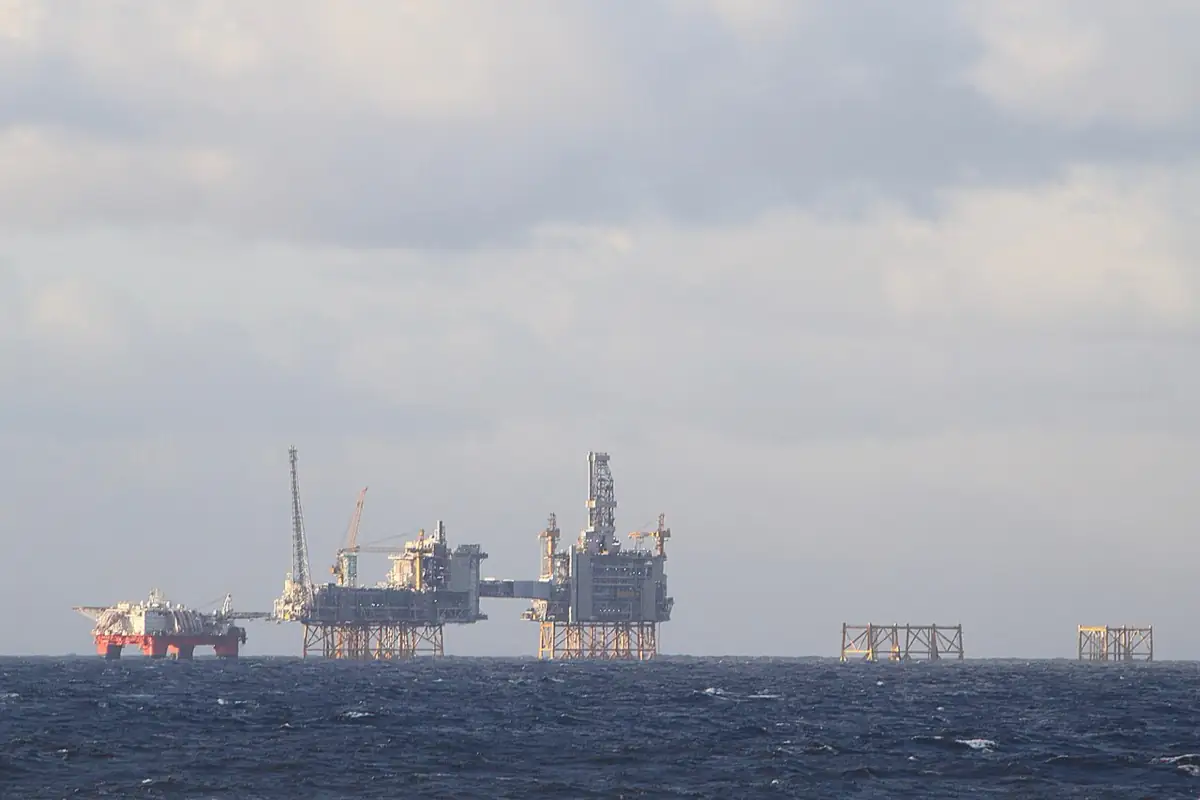
Oil and gas platforms in the North Sea off Scotland, photographed in 2018. Photo: NAC / Wikimedia Commons, CC BY-SA 4.0.
Europe baffled by 2030 net zero call
The finance and emissions clauses are likely to be hardest for wealthy nations. Politico reported that European diplomats were baffled by a line in the text. It "recognizes" a call from some developing countries for rich nations to "achieve net-zero emissions by 2030." The EU and the UK both target climate neutrality in 2050, two decades later.
Tripling adaptation finance will also be difficult for donor governments under budget pressure at home, Politico noted.
Germany's Heike Henn told reporters it was not necessary to anchor either the fossil fuel roadmap or the electrification target in the cover decision, according to Climate Home News. She said Germany supports the electrification pledge. But it sees new numerical goals as a matter for the 2028 global stocktake, the UN's five-yearly review of collective progress.
Resistance also comes from the other direction. Climate Home News reported that the Arab Group and the Like-Minded Developing Countries bloc oppose new sectoral targets in the text. Saudi Arabia rejected any reference to Brazil's roadmap for transitioning away from fossil fuels. That is a voluntary plan produced under last year's COP30 presidency.
African warning on finance
African negotiators fear the broad text could draw attention away from binding commitments on money. An African delegation source spoke anonymously to the Turkish state news agency Anadolu. The source called the cover decision a "distraction" and a "parking lot" for unresolved issues.
"We’re running away from accountability by all means, and the cover decision is one of them," the source said. They argued that pledges made in a political declaration are hard to enforce, unlike outcomes from formal negotiating tracks.
The source said developed countries had not yet agreed to $120bn, with a lower figure of $100bn also under discussion. They estimated that even $120bn would cover only around 30% of developing countries' adaptation needs. "Even if they were to agree on the $120 billion, it should be the minimum," they said.
The source also pointed to the UK. "You can’t expect Nigeria to phase out before the UK, and the way the UK is still opening up due to fossil fuel exploration," they said. Anadolu suggested this likely referred to new North Sea oil development. "Those that have benefited from pollution have to do it fast and fair," the source added.
Campaigners split on substance
Environmental groups welcomed the ambition but questioned the detail. Martin Kaiser, head of Greenpeace Germany, told DW: "The new negotiating text contains all the necessary building blocks for a successful outcome to the conference: from the goal of climate neutrality for all industrialized countries by 2030 to a work program that can keep the 1.5-degree limit in place." He nonetheless criticised the lack of binding commitments.
The campaign group 350.org was more critical. It said the draft welcomes Brazil's fossil fuel roadmap but drops any reference to continuing that work. It also objected that the electrification section promotes electrification "regardless of the electricity mix". It said this should be tied to renewables instead.
That phrasing has proved divisive. DW reported that many delegations want electrification strictly linked to clean power. The draft text says "electrification can provide co-benefits regardless of the electricity mix".
The summit opened on 9 November. Hemera reported on 15 November that US Democrats had arrived in Antalya while the Trump administration stayed away. This left the world's largest historical emitter without an official presence at the talks.
What happens next
Heads of delegation and ministers will now respond to the draft. The presidency plans at least one revised version before the official deadline on Friday 20 November. UN climate talks have often overrun by a day or more. The clearest measure of what Antalya delivers will be whether the "immediate transition" language and the $120bn figure survive into the final text.
Featured image: Energy Secretary Ed Miliband attends COP29 (54150341472) by UK Government, via Wikimedia Commons, CC BY 2.0.


