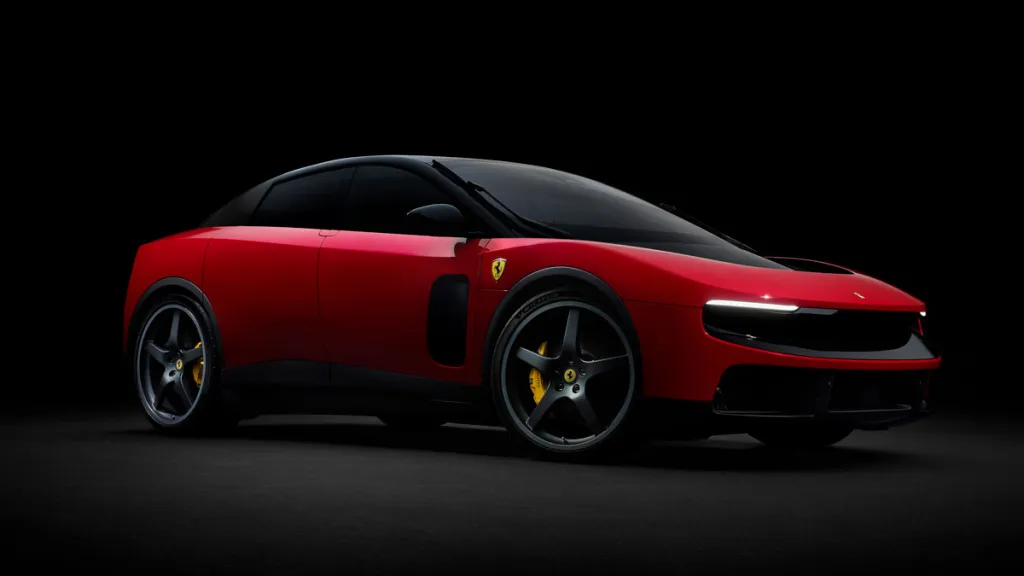
For nearly eight decades, the word "Ferrari" has meant roughly one thing: a loud, low, two-seat expression of internal combustion built to thrill more than to commute. The Luce - Italian for "light," and the company's first fully electric car, sets out to mean something else entirely. It is a four-door, five-seat sedan. It is silent. And at €550,000 (about $640,000), with deliveries due in the fourth quarter of 2026, it asks Ferrari's wealthiest customers to accept all three departures at once.
That is the real story of the Luce, and it is bigger than any spec sheet. This is the most consequential product decision Maranello has made in a generation. A simultaneous bet on electrification, on practicality, and on a price point that doubles most of the existing range. Get it right and Ferrari proves it can own the top of the luxury-EV market before anyone else gets there. Get it wrong and it spends years explaining why the first electric Ferrari was also the first five-seat Ferrari nobody asked for.
What Ferrari is actually selling
The numbers are deliberately overwhelming. According to CNN Business, the Luce uses four electric motors, one per wheel, for combined output of more than 1,000 horsepower, a top speed beyond 310 kph, and a quoted range of over 500 kilometres. It is the first five-seater in Ferrari's history, and it weighs more than 2.2 tonnes, a figure that tells you most of what you need to know about the engineering compromise at its heart.

The headline collaborator is Jony Ive, the former Apple design chief, whose collective LoveFrom worked on the car. That partnership is the clearest signal of intent: Ferrari is not pitching the Luce as a faster sports car but as a design object, a piece of rolling industrial art aimed at buyers who already own a 296 or an SF90 and want something for the days they are not driving one.
The Luce does not arrive alone. Motor1 reports it is one of five new Ferraris debuting in 2026, though at least some of the others are modified versions of existing models. That cadence matters: the Luce is the tip of a much broader product push, not a one-off experiment Ferrari can quietly walk back.
The case for calling it a masterstroke
There is a genuinely smart strategy here. Luxury is the one corner of the EV market that has proved resistant to price wars and margin collapse. Buyers at €550,000 are not cross-shopping on cost-per-mile; they are buying scarcity and signalling. Ferrari's brand equity, arguably the strongest in the entire car industry, is precisely the asset that travels best into that space, where a badge can carry a car that the engineering alone could not.
By going high, Ferrari also protects its core. A 1,000hp electric four-door does not cannibalise the V8 and V12 cars that remain the soul of the business; it sits above and beside them, capturing a different occasion and, crucially, a different wallet. And by partnering with Ive rather than badge-engineering an EV onto an existing platform, Ferrari is trying to define what a luxury electric car should feel like before German and British rivals set that standard for it.
The case for caution
And yet the risks are not small. The first is dilution. Ferrari has spent decades engineering scarcity and focus; a five-seat, two-tonne-plus electric sedan is a long way from the Le Mans-bred mythology the brand sells. Every attribute that makes the Luce a good luxury car - weight, space, silence, is an attribute Ferrari has historically defined itself against.
The second is the proof problem. A 1,000hp figure and a 310 kph top speed are easy to print and hard to make meaningful in a 2.2-tonne car; raw output is not the same as the delicacy and feedback that justify a Ferrari badge. Until independent reviewers drive it, those numbers prove the Luce is fast, not that it is a Ferrari.
The third is timing and field. The half-million-euro electric flagship is no longer empty territory. Established luxury marques and EV specialists are all circling the same buyer. Ferrari's name buys it a head start, not a monopoly, and a misjudged first effort is the kind of thing a brand this carefully managed cannot easily un-launch.
The verdict, for now
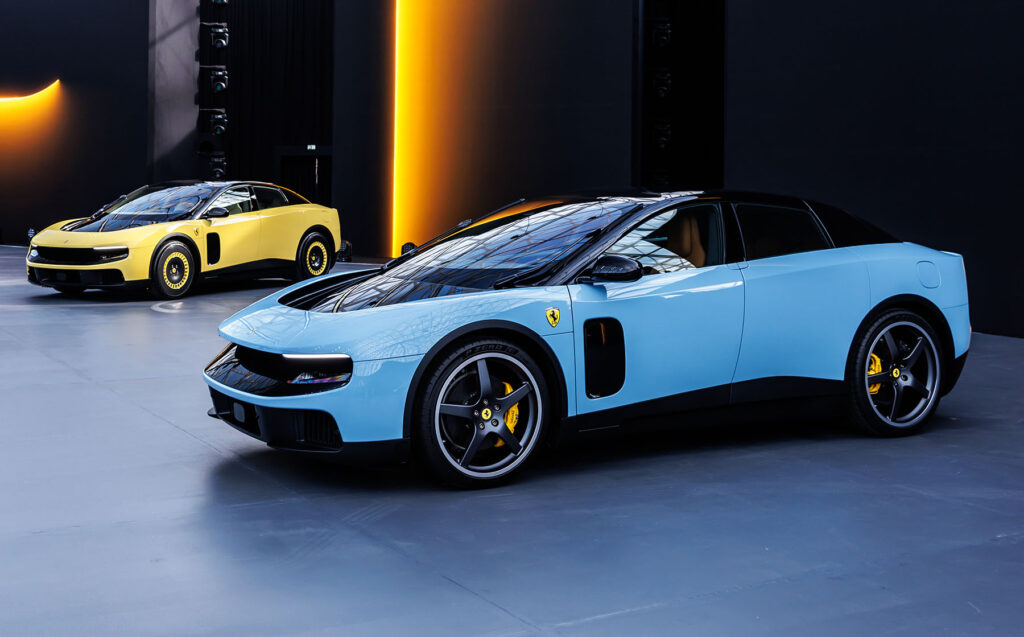
On balance, the Luce looks less like a vanity project than a calculated land-grab, Ferrari using its strongest asset, the badge, to claim the most defensible patch of the EV market before rivals fence it off. The strategy is sound. The execution is the open question, and it is the one that matters: whether a silent, five-seat, two-tonne Ferrari can still feel like a Ferrari from behind the wheel. That verdict waits on the first drives. Until then, the Luce is the boldest bet Maranello has placed in modern memory — and the one it can least afford to lose.