

Saudi-backed forces fighting for Yemen's internationally recognised government have withdrawn from positions overlooking the Bab al-Mandab strait. The strait is the narrow channel at the southern mouth of the Red Sea. The Southern Armed Forces are the main government-aligned force in the south. On Sunday 15 November, they said troops were leaving Dhubab airport and the surrounding area to defend Aden, the government's interim capital.
Houthi-run media and Houthi military sources said the Iran-backed movement had since moved into the vacated ground. Government military sources told Agence France-Presse (AFP) that Houthi fighters were now about 60km from Aden. The pullback appears to end a six-week government counteroffensive. It leaves one of the world's main shipping chokepoints largely under Houthi control. Gulf energy routes are already strained by the US-Israeli war with Iran.
Competing accounts of the withdrawal
In a statement reported by Reuters, the Southern Armed Forces announced a "redeployment operation" from Dhubab airport and the Bab al-Mandab area, west of Taiz governorate. "This step is taken based on the priority of securing the capital, Aden, and the neighbouring governorates, as well as strengthening the front lines and addressing existing threats," the statement said.
The government told AFP it was moving troops "where current circumstances require", with Aden and nearby provinces taking priority. Two Houthi military sources told the agency that their fighters had deployed across the evacuated areas. They said these stretched from Dhubab to positions near Khor Amira, a distance of more than 150km. None of these territorial claims could be independently verified.
Reuters' account, based on Yemeni military sources, is less clear-cut. It said government troops had pulled back to al-Suqyah, just south of Dhubab and about 150km west of Aden. From there, those sources said, they were still trying to push the Houthis out of nearby coastal areas. Al Jazeera reported that government spokesman Majid Al-Nazili called on the international community to help restore government control over the strait and the west coast. Saudi Arabia had not commented.
How close the Houthis are to Aden
Reports of the front line differ, partly because the fighting runs along more than one axis. Four military sources and two government sources told AFP that the Houthis had seized the Al-Maqatirah and Al-Madaribah districts of Lahj province. The province lies between the strait and Aden. They placed Houthi fighters at the Al-Kharaz camp in Al-Madaribah, 60km from the city. Reuters' sources put Houthi forces in the highlands just outside Tur al-Bahah district, about 80km from Aden.
Al-Maqatirah matters because the main road between Aden and Taiz runs through it. Taiz, Yemen's third-largest city, has been under Houthi siege for weeks, and aid cannot enter. Government forces said on Sunday they would "continue operations aimed at breaking the siege of Taiz".
Aden, home to more than a million people, is preparing for an assault. Military officials told AFP on 13 November that troops had begun building sandbag defences and digging tunnels around the city. On Sunday a Houthi missile strike on a checkpoint in Lahj killed eight people and wounded 12, according to military and government sources quoted by AFP. Government military sources also say a Houthi attack on 15 October targeted Aden's presidential palace and killed four people. The Houthis tried and failed to take the city in 2015.
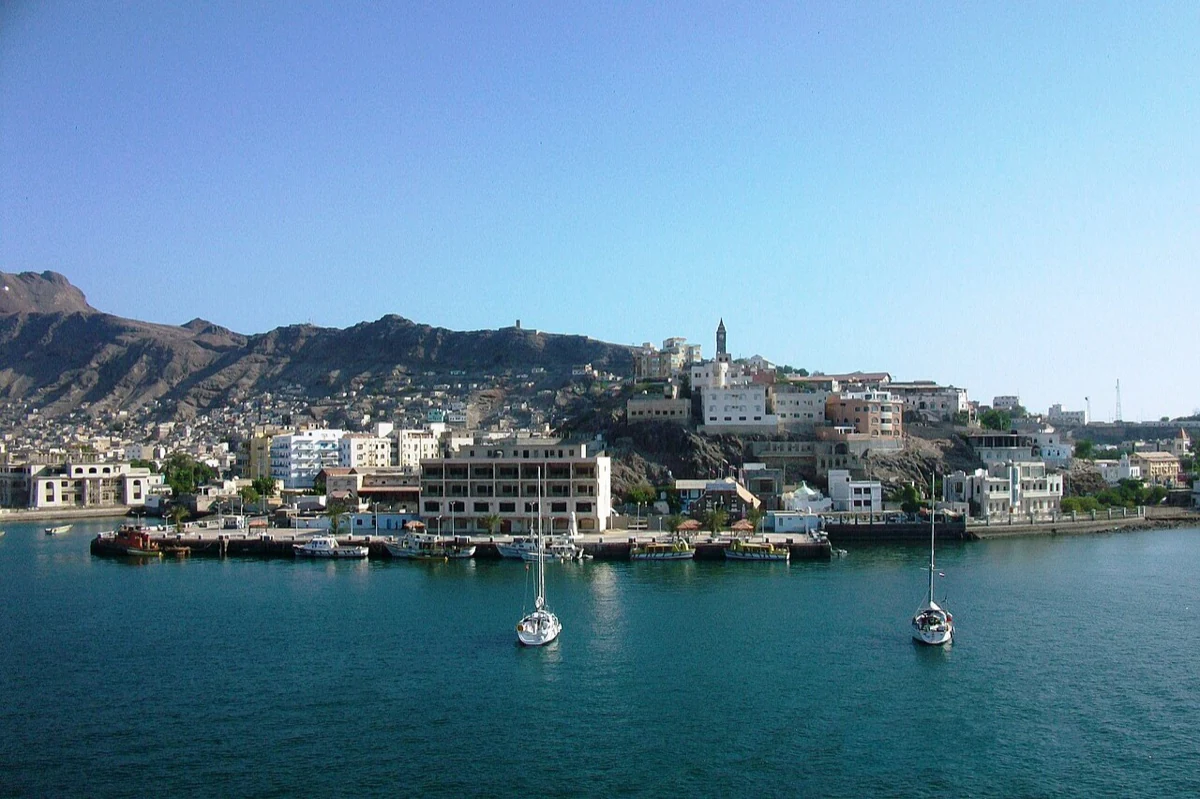
The port of Aden, Yemen, photographed in October 2010. Photo: T3n60 / Wikimedia Commons, CC BY-SA 3.0.
A prisoner release amid the fighting
The International Committee of the Red Cross (ICRC) said the Houthis freed 600 members of government forces as fighting continued. They had been held since hostilities resumed in July. According to Anadolu Agency, the ICRC said the release was initiated by the Houthis' National Committee for Prisoners Affairs. It also said the release fell outside the 2018 Stockholm Agreement. That UN-brokered deal included a prisoner exchange. The ICRC said it had no say in who was freed or how many. Its staff did, however, interview detainees privately beforehand.
The Houthis called the release a humanitarian initiative and "the largest unilateral prisoner release and pardon operation in the history of the conflict". They accused the government of failing to reciprocate. The government had not commented on the release.
The humanitarian toll is rising. The UN says more than 1,600 people have been killed and over 300,000 displaced since fighting resumed in July. About half of the displaced are in Taiz, according to Reuters.
Why the strait matters
The Bab al-Mandab links the Red Sea to the Gulf of Aden and the Indian Ocean. It is the southern approach to the Suez Canal and a main route for trade between Asia and Europe. Its importance grew after the US and Israel went to war with Iran in February. The Strait of Hormuz is effectively closed. Saudi Arabia therefore shifted oil exports to its Red Sea coast, the BBC reported. The Houthis' first seizure of the coast in September contributed to a surge in oil prices.
At the time, the Houthis said they posed no threat to international shipping but would keep targeting Saudi vessels. They said they had captured Perim Island, at the mouth of the strait, and the port of Mokha.
The retreat follows a broader Houthi campaign against Saudi Arabia. On Sunday the Houthis claimed to have targeted King Khalid International Airport and the financial district in Riyadh, DW reported. Saudi Arabia did not confirm that attack. The Saudi-led coalition said it had intercepted ballistic missiles aimed at Riyadh and drones over Mecca and Medina, according to Al Jazeera. The Houthis denied targeting Mecca.
The setback has implications beyond Yemen. It suggests that months of Saudi air strikes have not stopped Houthi ground advances. It also means Iran's most active regional ally now holds positions over a second energy chokepoint while Iran contests Hormuz.
What comes next
The immediate test is whether government forces can hold the approaches to Aden through Lahj. A second test is whether they can reopen the road to Taiz. Diplomacy offers little near-term relief. The question is whether Saudi Arabia escalates to protect Aden or looks for a way out of a war it is not winning.
Featured image: Bab-el-Mandeb, outer space by Earth Science and Remote Sensing Unit, NASA Johnson Space Center, via Wikimedia Commons, Public domain.


