

SpaceX has caught the upper stage of its Starship rocket with the mechanical arms of its launch tower in Texas after a flight to orbit. It is the first time the company has recovered the spacecraft this way. The vehicle, known as Ship 42, settled between the tower's arms at Starbase at about 15:20 local time (21:20 GMT) on Saturday 14 November, roughly 22 hours after lift-off.
The mission, Starship's 15th full-scale test flight, was meant to recover both stages. That plan ended on Friday 13 November, when the Super Heavy booster, the rocket's lower stage, abandoned its own catch minutes after launch and exploded over the Gulf of Mexico. The ship's return is still a step towards a rocket that can be flown again and again. SpaceX says that is central to cutting the cost of spaceflight, and NASA is relying on Starship for its Moon programme.
How the flight unfolded
With both stages stacked, Starship stands 124 metres (407ft) tall. It is the largest and most powerful rocket yet flown. It lifted off late on Friday afternoon from Starbase, SpaceX's site near the US–Mexico border. The upper stage, itself called Starship and about 52 metres (171ft) long, separated cleanly from the booster and reached orbit.
Once there, it released 26 of SpaceX's third-generation Starlink internet satellites. It then circled the Earth 14 times at an altitude of about 265km (165 miles), according to the Associated Press. The previous flight managed only one to two orbits. Flight 15 was just the second time Starship has reached orbit.
To come home, the ship fired an engine to begin its plunge into the atmosphere. It slowed from an orbital speed of about 27,000km/h, shielded from the heat by its tiled heat shield, ABC News (Australia) reported. It then relit three engines to swing upright and steer towards the tower. Two arms, nicknamed "chopsticks", closed around the vehicle as it hovered.
SpaceX said everything on the spacecraft, including the heat shield, appeared to have worked well.
"Can you believe it?" the SpaceX commentator Dan Huot shouted on the company's broadcast, as crowds cheered at the site. Elon Musk, SpaceX's founder and chief executive, congratulated his "incredible team".
Why the booster was lost
The booster was due to fly back to the same tower about ten minutes after launch. Boosters have done this successfully on three earlier flights. This time it diverted to the sea instead. On Saturday its wreckage was still in the Gulf of Mexico, cordoned off by buoys, the AP reported.
SpaceX's Kate Tice said the booster's engines stopped firing too early on the way back. Its guidance, navigation and control system, the onboard software that steers the vehicle, then judged that it was out of position. It automatically sent the booster offshore and triggered its self-destruction.
"It was doing what it was supposed to do. Basically, it detected that the booster was not in the place it was supposed to be to proceed with a catch," Huot said early on Saturday, according to the Guardian. Musk said the booster had been "slightly low on fuel". SpaceX says engineers are still investigating the cause and has not yet given a fuller explanation.
The flight was also felt far from Texas. On Friday the Hawaii Department of Transportation briefly paused some West Coast flights because of the risk from falling debris, CNBC reported. That order has since been lifted.
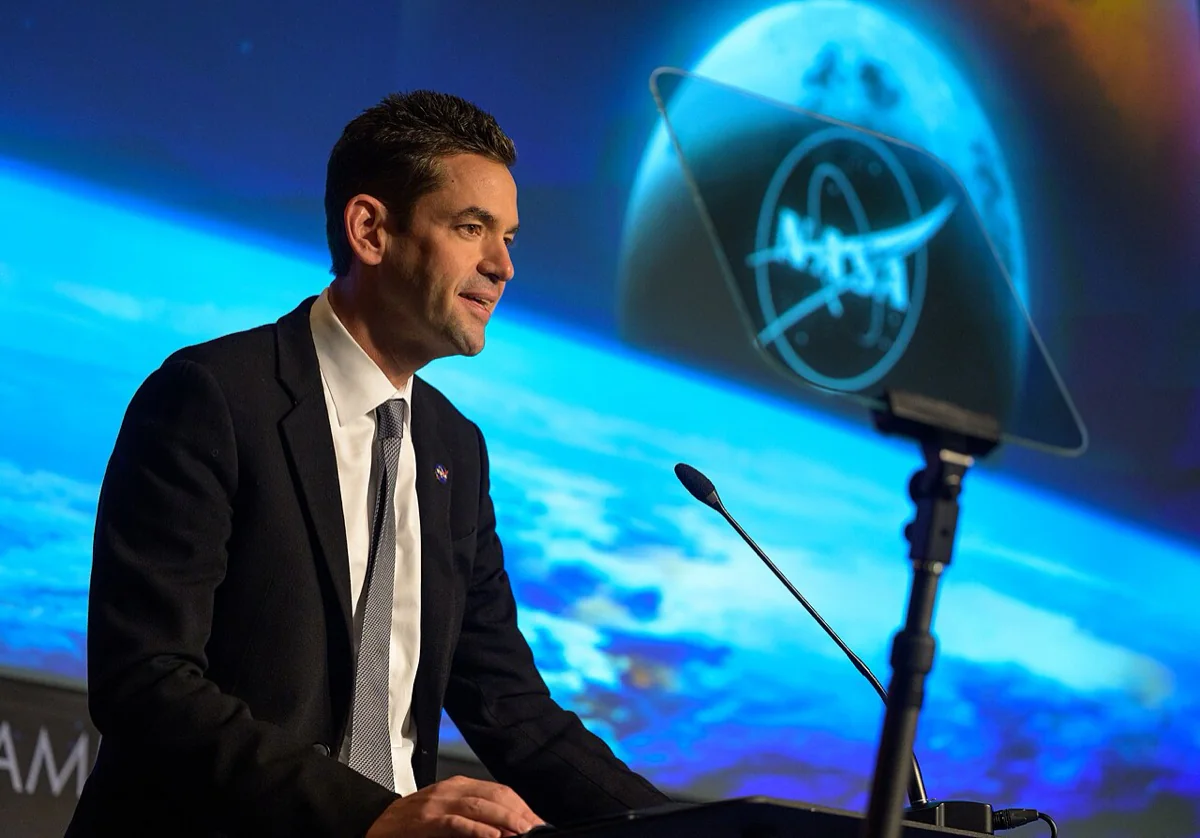
NASA Administrator Jared Isaacman speaking at an agency town hall at NASA Headquarters in Washington on 19 December 2025. Photo: NASA Headquarters / NASA/Bill Ingalls / Wikimedia Commons, Public domain.
Why catching the ship matters
Most rockets are partly or wholly thrown away after one use. SpaceX's Falcon 9 has launched more than 700 times since 2010. Its first stage lands for reuse, but its second stage, which carries payloads into orbit, is discarded in the ocean after every flight. Starship is designed so that both stages can be recovered and flown again. Musk wants it to land and take off much as airliners do.
Until Saturday, that goal had been only half demonstrated. Catching a ship after orbit shows the vehicle can survive re-entry and come back to its launch site in one piece. It does not yet show that a ship can be turned around quickly and cheaply. SpaceX is still developing heat-shield tiles that would need little or no refurbishment between missions, ABC reported. Recovering both stages on a single flight also remains to be done.
Musk had been cautious beforehand. On the company's third-quarter earnings call he said "success is not guaranteed on these first flights, but I’d say it’s more likely than not that this succeeds next flight," The Verge reported. He has also said SpaceX wants to move to weekly, then twice-weekly, Starship flights.
The commercial stakes are close at hand. Starlink, SpaceX's satellite internet service, is the company's main profit centre, according to CNBC. Its constellation already exceeds 11,000 satellites in low Earth orbit. SpaceX says a single Starship can carry up to 60 of the newer V3 satellites.
NASA, Florida and what comes next
NASA is paying SpaceX billions of dollars to use Starship as a lander for Artemis astronauts. The agency welcomed the result. "It was almost magic," wrote the NASA administrator, Jared Isaacman, on X. In another post he wrote: "Making more believers by the day." Isaacman is an ally of Musk, who advised Donald Trump to appoint him, the Guardian noted.
SpaceX expects to begin launching Starships from NASA's Kennedy Space Center in Florida within the next few months. The next Artemis mission will start from there. According to the AP, Artemis III will stay in Earth orbit. Its four astronauts will practise docking their capsule with both Starship and Blue Origin's rival lander, Blue Moon.
The two companies are due to take turns landing crews on the Moon. NASA is targeting as early as 2028 for Artemis IV. That would be the first crewed Moon landing since the Apollo era more than half a century ago.
Before then, SpaceX must explain why the booster ran short and show it can bring back both stages on the same flight. Only after that can it test whether caught vehicles can fly again at the pace it has promised.
Featured image: SpaceX Starship SN8 launch as viewed from South Padre Island by Forest Katsch, via Wikimedia Commons, CC BY-SA 4.0.


